
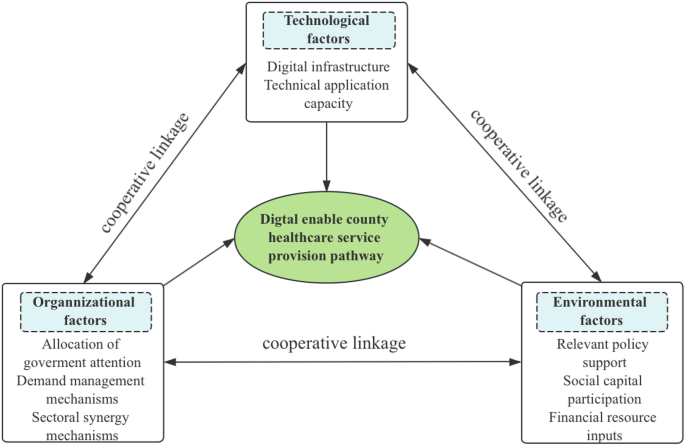



A total of 16 participants were interviewed (median age 50 years; Interquartile range 38–59 years; 9 female), of whom 6 were GPs, 2 were consumer representatives, and others were health service managers (HSM) or healthcare professionals (HCP), some with overlap in functions (Table 1). Participants were from 3 different regions in Sydney: 5 from Northern Sydney, 4 from Central-Eastern and 5 from Western Sydney. Interviews had a mean duration of 39.6 min (range 12.2—66.6 min). Based on the aims of the study, three major themes emerged (Fig. 1): support and resources for GPs; motivation for GP advice lines; and factors influencing the uptake and sustainability of GP advice lines.

Illustrative representation of themes and subthemes
Support and resources for GPs to manage urgent care patients in the community
To support the management of urgent care patients in the community in coordination with virtual hospital services, three major needs were reported: keeping GPs informed about hospital care for their patients, clear referral pathways and knowledge and decision-making support.
a. Keeping GPs informed on hospital care for their patients.
Participants reported that keeping GPs in the loop regarding hospital care for their patients is critical to ensure continuity of care between tertiary and primary care. Participants stated that little or no information was being shared with GPs on the hospital care experienced by their patients, stating that: “the internal resident or registrar should be picking up the phone routinely for every admission and talking to the GP, involving the GP in care team meetings, so that they’re actually part of the management plan and discharge planning. …we’re unaware that they were admitted or discharged. We’re just unaware that it even happened” – P11, GP.
b. Clear referral pathways.
Clear referral pathways was identified as a necessity as participants highlighted the complexity of the Australian healthcare system reporting that it is challenging to navigate for GPs particularly for those who gained their qualifications from other countries. For example, a participant said: “So, we need to provide them with really clear pathways in, they need to know who to ring, how to easily get through to someone, who’s gonna be on the other end…it can be very difficult for them trying to navigate our system and to know… how to get through to the right department or the right specialist.” – P02, HSM.
It was also reported that there is a need for GPs to be able to refer patients to the hospital in a manner that bypasses the ED for direct access to care when the clinical requirements of the patient are clear: “I think the next step is having the GP able to directly refer patients into the hospital without going through ED for other types of care, and this might mean… treatment of wound care or fractures.” – P012, GP.
c. Knowledge and decision-making support.
Participants reported that it was key to provide knowledge and decision-making support to GPs to help determine whether the patient can be managed in their care or in hospital. For example, a participant said: “I suppose it’s sort of critical decisions about whether someone’s safe to be managed at home or not.” – P011, GP. Other participants clarified that knowledge support is not about providing generic clinical information but more about providing personalised actionable information based on the unique circumstances of individual patients: “[an] individual scenario needs to be tailored and we need advice on how to tailor it…it’s not the clinical information we necessarily need, it’s how to apply it.” – P08, GP. It was further noted that one way to provide timely, personalised, and actionable knowledge and decision-making support is through the use of GP advice lines.
Other general practice necessities reported by participants included: better awareness of existing support and having an adaptable funding model to allow GPs to be adequately remunerated for the management of urgent care patients in the community – see Table 2 for additional illustrative quotations.
Motivation for GP advice lines
The need for the advice lines was reported to have arisen from the shift to the community-based model of care for COVID-19 patients: “we had been asked to see … how general practice could start to take over care of COVID patients … well, what about if we had a GP advice line, that was for the GP’s to ring up and speak to a GP in the virtual hospital”—P03, HSM.
a. Benefits of GP advice lines.
Participants stated that GP advice lines were beneficial because they helped to minimise knowledge gaps and increase GP confidence in their skills and expertise in managing urgent care patients during the period of uncertainty in the COVID-19 pandemic. For example, a participant reported that, “OK, I don’t actually have to know every bit of minutiae, the people at the end of this line, doctor to doctor, will tell me what I need to do or know”—P07, GP, while another stated that, “sometimes you’re just not quite sure and so you can just ring … so it’s that confidence that you’re making the right decision by the patient.”—P09, GP.
Another benefit of GP advice lines was that they facilitated an easier referral process, as GPs could speak to a specialist and directly get an appointment for the patient in a manner that bypasses the emergency department: “So, it allows them to get seen in a timely manner in the public system, but without having to go through the emergency department.”—P09, GP (see Table 3 for additional quotes).
Factors influencing the uptake and sustainability of GP advice lines
A. Facilitators of GP advice lines.
Various facilitators to the use of the GP advice lines were identified by the participants, with the availability of a specialist response the most frequently reported. Participants stated specialist doctors with a level of seniority, training and experience, and preferably those with general practice expertise, are in the best position to be the receivers of the call; as this enabled the uptake and continuous use of the advice lines. A participant stated, “if you’re calling the cardiology line, you’d want a cardiology AT who’s working … in the rapid access clinic…. you get the best outcomes and the best communication when you’re working like for like, so doctor to doctor.”—P05, HSM.
Also, GP advice line models that were designed to provide real-time support via synchronous communication between GPs and specialist doctors were preferred to models with asynchronous communication: “it was a great way for the GP’s to be able to talk immediately, not e-mail someone and hope they get a response…. so it was this instantaneous decision making”—P07, GP.
Using various promotion strategies to create awareness of the purpose of, and how to use the advice line, was another facilitator. Participants further highlighted the primary health networks (PHNs) were a good avenue for disseminating information but insufficient to reach all GPs: “a lot of GP’s have their own organisations … and some of those will go, ‘no, we don’t have anything to do with the PHN’”—P13, GP.
Other reported facilitators to the GP advice lines included: co-designing the service with GPs and the availability of funding support (see Table 4 for additional quotes).
b. Barriers to the uptake of GP advice lines.
Participants noted some barriers to the uptake of GP advice lines. A key barrier was the limited hours of the service, which prevented GPs who work after hours and on weekends from using the service. For example, a participant stated that “but often I find I have to wait until 9:00 or 9:30 to call someone-…call an advice line. Most GP practises open at 8:00 or above.”- P08, GP while another said, “I definitely think having longer hours would have been good… people get sick on the weekends”—P03, HSM.
Another barrier that was raised was the lack of clarity on the role of the clinician on the receiver’s end of the call. Participants reported occasions where the GPs rang clinicians through the advice line but the receiver of the call was not fully aware of their role and unable to support GPs as needed to manage an urgent care patient in the community: “the only problems I’ve had are when I’ve rung the line and the person has no idea… what their role is.”—P09, GP.
Manual data collection was also noted as barrier to the use of the advice line, which makes it challenging to report on how the line is being used by GPs: “so with the GP advice line, we’ve done a lot of the data collection manually on spreadsheets… it’s a bit clunky, doesn’t make for easy reporting.”—P02, HSM (see Table 4 for additional quotations to support these themes).
c. Strategies to ensure the sustainability of GP advice lines.
To support the sustainability of the advice lines, participants emphasised the need to broaden the service from primarily focusing on COVID-19 to focus on other patient cohorts so that benefits can be felt by patients with a range of conditions in the broader community e.g. influenza. It was however noted that broadening the advice line service should be done cautiously: “we need to start small. We need to be specific to start with because if you open the door to every single condition, we’ll just get overwhelmed easily. And [this] …is safer option as well …So, we’re prepared to support and then gradually open the gate to support the wider community.”—P04, HSM.
Further digitising the advice line technologies, by providing additional electronic functionalities, was another strategy participants reported would be helpful in sustaining the advice lines. For example, a participant stated that, “if you look at the GP advice line in its current form, it’s a phone service, … if there was… like a chat service that would allow,… [communication] via chat, …to discuss patient scenarios, secure sending of images…. real-time, sharing of images.”—P05, HSM.
Other participants indicated that the use of artificial intelligence (AI) driven clinical decision support tools, including the use of large language models such as Chat-GPT may have a role to play in complementing the advice lines. They noted that AI-driven tools could be integrated into practice software, and Health Pathways, such that a tiered level of support can be provided on low-risk concerns, while high risk issues would be handled through doctor-to-doctor conversations. For example, a participant stated that, “the advice line might be receiving calls that in the future could be handled through CHAT GPT AI type things…so the level of escalation may actually be for those that are a lot more serious, where you actually require a consultation with a fellow GP…”—P10, HSM.
Participants also reported that evaluation was imperative for the sustainability of the advice lines. Evaluating the advice lines was described to be critical to showcasing its benefits to enable ongoing support from funders: “so I thought, well if we can validate that this was a great utilisation of money, it connected GP’s to tertiary hospital, ensured that the patient had continuity of care as well, and if they were discharged from hospital.. by connecting them with their GP, then we would get ongoing funding.”—P01, HSM.
As part of an evaluation, participants stated that it was imperative to measure patient outcomes such as hospital presentation, and hospital admissions; clinician outcomes such as frequency of calls from a specific GP, reasons for the call, clinician experience and satisfaction; and health economic outcomes such as cost–benefit analysis: “I would love to look at some sort of evaluations that look at potential ED avoidance. Did this help avoid ED? You could then equate that to, you know, cost savings of ED admissions and bed stay and things like that as well” P05, HSM.
Consumer involvement was also highlighted as important in the ongoing use and expansion of the capabilities of GP advice lines. Participants indicated that the advice lines could evolve from a 2-way conversation to one that involves the GP, the specialist doctor and the patient. However, this was dependent on an alignment with the patient’s preference, and the patient’s level of health literacy. Nonetheless, it was noted that the current model of advice lines would benefit from trust between the GP and the patient, patient’s understanding and awareness of the usefulness of the advice lines and patient consent. A participant stated: “the only thing I’d want to be assured of was actually that advice line went through to a hospital and another clinical professional who was qualified to advise on whatever it was.” – P16, consumer. See Table 4 for more quotes.
link
More Stories
UniHealth Hospitals Limited Announces the Commissioning of its Advanced Tertiary Care, Multi-Specialty Hospital in Navi Mumbai
Predictors of opportunistic infections among people living with HIV: a prospective cohort study from a tertiary care setting in India
The impact of DRG payment reform on inpatient costs for different surgery types: an empirical analysis based on Chinese tertiary hospitals