


Thursday, November 13, 2025
Media Contact:
Stephen Howard | Director of Marketing & Communications | 405-744-4363 | [email protected]
A delay in health care delivery can turn any routine checkup into a frustratingly
tedious process.
In a hospital’s emergency department, a long wait puts a patient’s life at risk.
Admitted patients, already vulnerable, face increasing danger as they wait for inpatient
beds. Emergency departments grow crowded. Physicians and nurses become overwhelmed
with excessive workloads and inefficient systems.
What if a few logistical changes could decrease the median wait time for an inpatient
bed by nearly 13 minutes, improving safety and reducing stress for all involved?
Oklahoma State University’s Center for Health Systems Innovation partnered with the OSU Medical Center in Tulsa to make this happen. This data-driven project took place from 2022-23 as
part of the Lean Health Care Internship, which trains OSU College of Osteopathic Medicine
students on improving health care systems.
It’s one of many initiatives developed and led by CHSI’s care delivery innovation
team.
“We aim to make meaningful change in the systems with which we collaborate,” said
CHSI director Dr. Marjorie Erdmann, who heads the care delivery innovation team. “You
change something, and it helps patients. It helps the workforce around the patients.
It helps the organization be healthier. Then, in the end, it helps communities. It’s
a ripple effect.”
What is CHSI?
CHSI, led by Dr. William Paiva, executive director and Patterson Chair, is a Spears School of Business center with a footprint on the OSU Center for Health Sciences campus. CHSI’s stated mission is to transform rural and Native American health care
through the implementation of innovative care models and information technology solutions.
CHSI works directly with providers who care for hundreds of thousands of patients
across Oklahoma. The center has partnered with the Leapfrog Group, a nonprofit organization
focused on hospital safety, quality and transparency, to encourage an annual safety
survey that assesses more than 2,000 hospitals nationally.
CHSI also houses The Oklahoma Business Collective on Health, which helps employers
understand how to better navigate self-insured health plans and offer affordable options
that make sense for their employees.
At the same time, CHSI looks toward the future, preparing the next generation of physicians to efficiently navigate the workplace.
Between OSU-CHS in Tulsa and OSU COM at the Cherokee Nation in Tahlequah, 42 students
have completed the Lean Health Care Internship. Believed to be the nation’s only program
of its kind for undergraduate medical students, this internship has received recognition
in the Association of American Medical Colleges Innovation Report.
“You change something, and it helps patients. It helps the workforce around the patients.
It helps the organization be healthier. Then, in the end, it helps communities. It’s
a ripple effect.”
— Dr. Marjorie Erdmann
Why does it matter?
Health care affects everyone, whether they’re clinicians, patients or both.
In the United States, more than 22 million people work in health care, according to the National Institute for Occupational Safety
and Health. At the same time, rising medical expenses place heavy burdens on individuals
and employers, making quality care inaccessible to many.
Clinics also face financial challenges, particularly in rural communities.
The U.S. Department of Agriculture’s Economic Research Service reported 146 hospitals in rural counties either fully shut down or ceased to offer
acute inpatient care between 2005-23. Today, many underfunded rural hospitals are
at risk of closing, which would force patients to travel farther for appointments and potentially
have higher expenses.
CHSI reaches out to communities where health care can be difficult to access. Earlier
this year, the center’s staff worked with Stacie Pace of OSU-CHS and Remote Area Medical
at a clinic offering free health services in Enid, Oklahoma.
While aiming to eliminate disparities in rural areas, CHSI’s practical solutions can
remove barriers for hospitals and clinics everywhere.
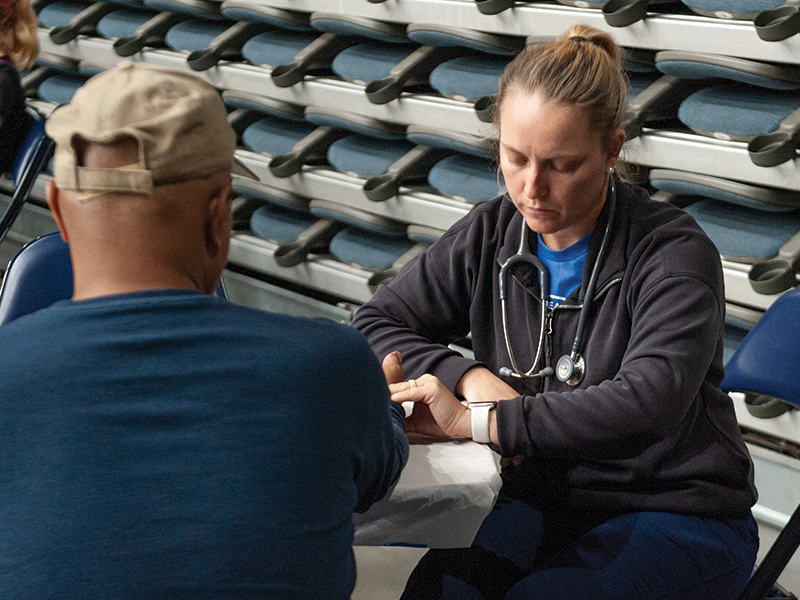
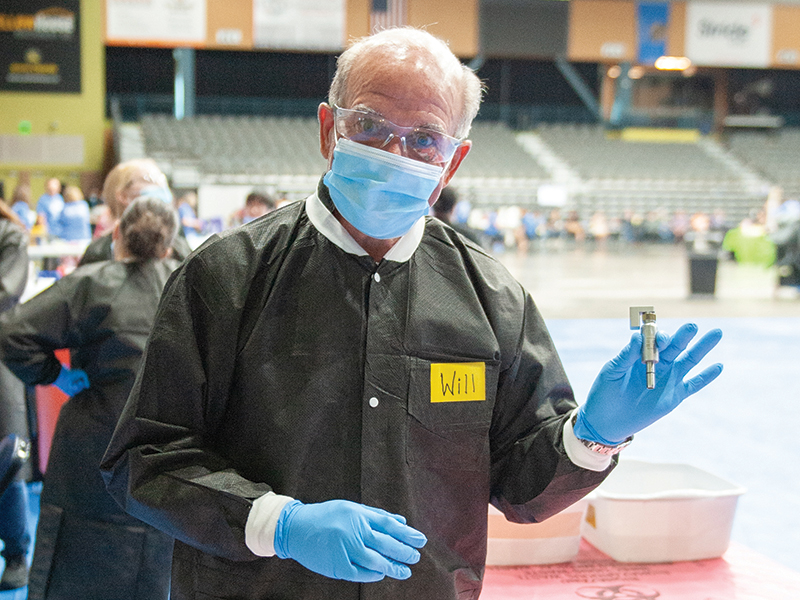
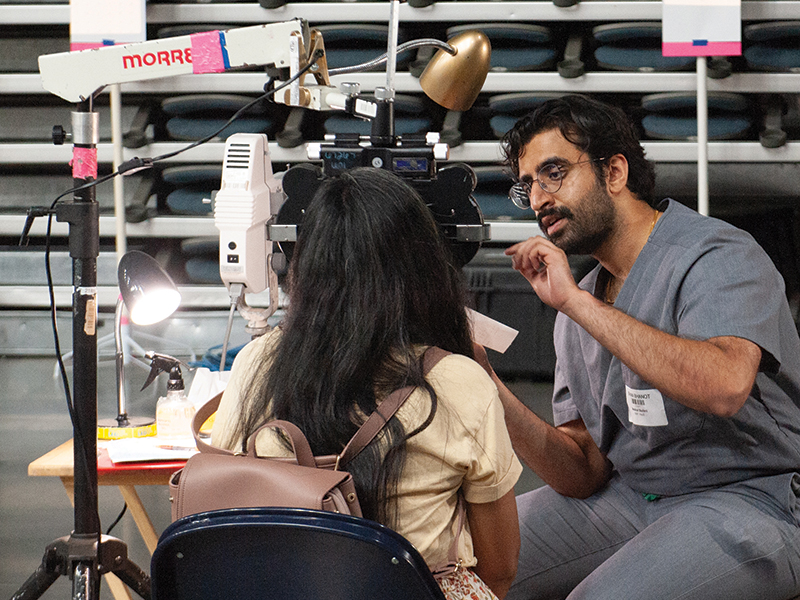
providers at a Remote Area Medical clinic in Enid, Oklahoma.
Who are the people?
CHSI launched in 2013 with significant financial support and resources from the late
Neal Patterson, a Spears Business alumnus who co-founded Cerner Corporation, now Oracle
Health.
“At our core, we innovate in two areas: care delivery and information technology,”
Paiva said. “These efforts complement OSU’s mission to educate and train health providers.”
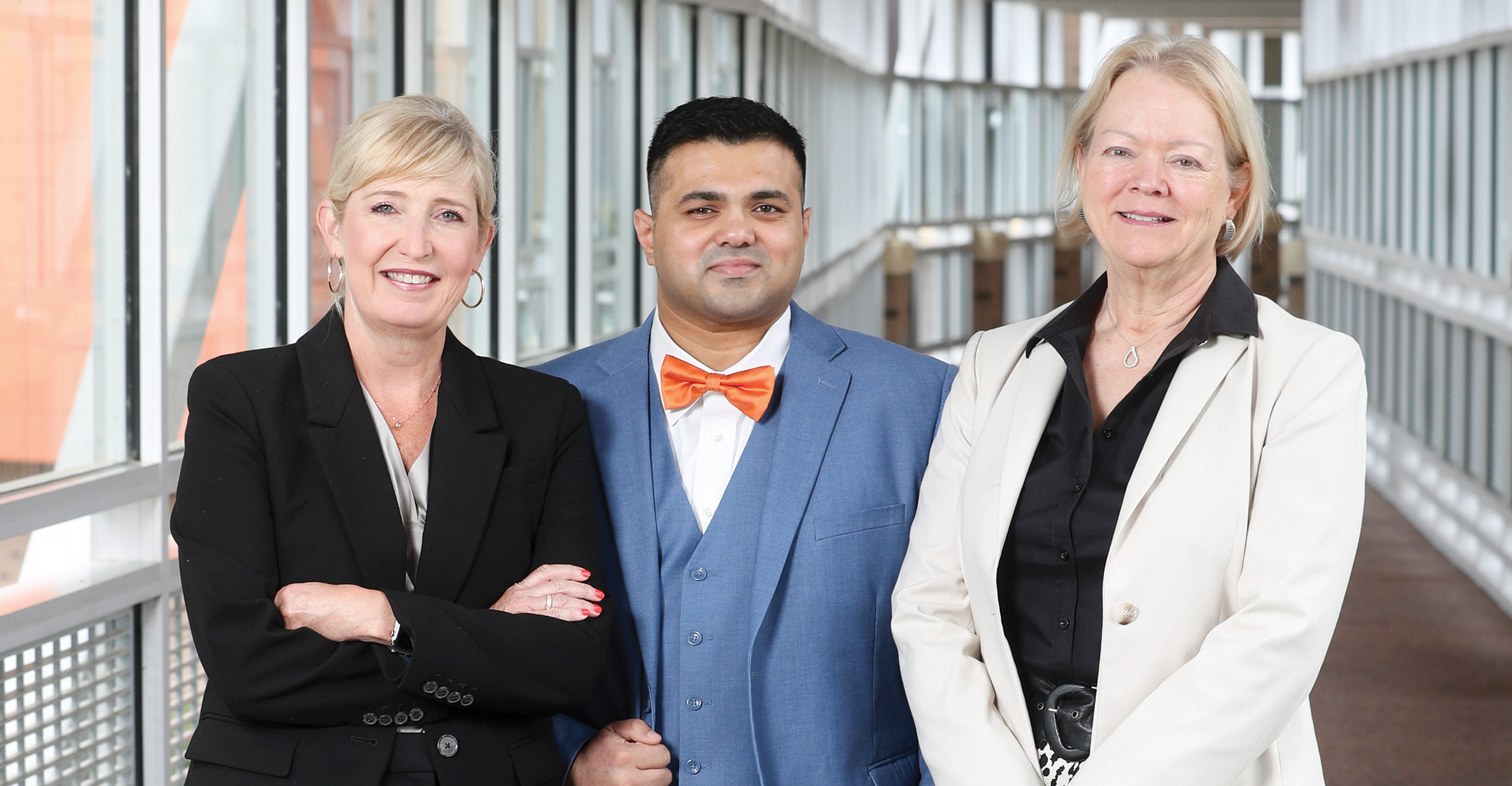
The care delivery innovation team consists of three dedicated Spears Business staff
members: Erdmann, project manager Ipe Paramel and Cari Marshall, director of The Oklahoma
Business Collective on Health.
Eleven years ago, Paiva hired Erdmann to lead CHSI’s care delivery innovation efforts,
an area in which she had 20 years of industry experience.
Intending to build on CHSI’s research and impact, Erdmann earned her Ph.D. in business
administration from Spears Business in 2022. As CHSI’s director, she has created successful
initiatives, analyzed data to conduct cutting-edge research and formed meaningful
partnerships, both in industry and across the OSU System.
Also 11 years ago, Paramel started working with CHSI as a graduate research assistant
after several years in industry focused on workflow and supply chain optimization.
Paramel, who has his master’s degree in health care administration from OSU and is
pursuing his doctorate, manages several initiatives. He leads the Rural Oklahoma Network
(ROK-Net), an AHRQ-registered Practice-Based Research Network (PBRN), which includes
the Innovation Review Initiative. This program connects entrepreneurs with clinicians
to implement advanced technologies in clinics.
Paramel remembers traveling across rural Oklahoma as a graduate assistant and meeting
with clinicians to identify common issues. At the time, many rural areas lacked high-speed
internet, yet the clinics had to maintain electronic health records.
“That was phenomenal to actually go out into the field and hear from people, what
their struggles are and what they have to undertake on a daily basis,” Paramel said.
“It gives you a whole different dynamic on what clinical workflow is, what resources
are lacking in rural areas and what could be things that help, too.”
Firsthand observation and data analysis form the backbone of CHSI’s applied research,
which appears in prestigious journals, including The Journal of the American Medical Association (JAMA).
Dr. Bryan Edwards, head of the Spears Business Department of Management, has worked
with Erdmann and Paiva on these publications, exploring topics that include physician-assisted
smoking cessation attempts and robotics in nursing. OSU’s robotics research won a
National Science Foundation grant with the University of Louisville.
These aren’t typical research activities for a business school, but CHSI is uniquely
positioned to facilitate interdisciplinary collaboration.
“We tend to segment them out in academia — health care over there, business over here,”
Erdmann said. “In reality, health care administrators are coordinating with physicians,
nurses and people who run maintenance and operations and do the financial planning.
It’s a big process with a lot of teamwork, and it’s critical to the success of people
in the business world.”
The Lean Health Care Internship introduces OSU COM students to this reality.
How are students involved?
Many hospitals have adopted Lean management practices, which originated with automotive
manufacturer Toyota.
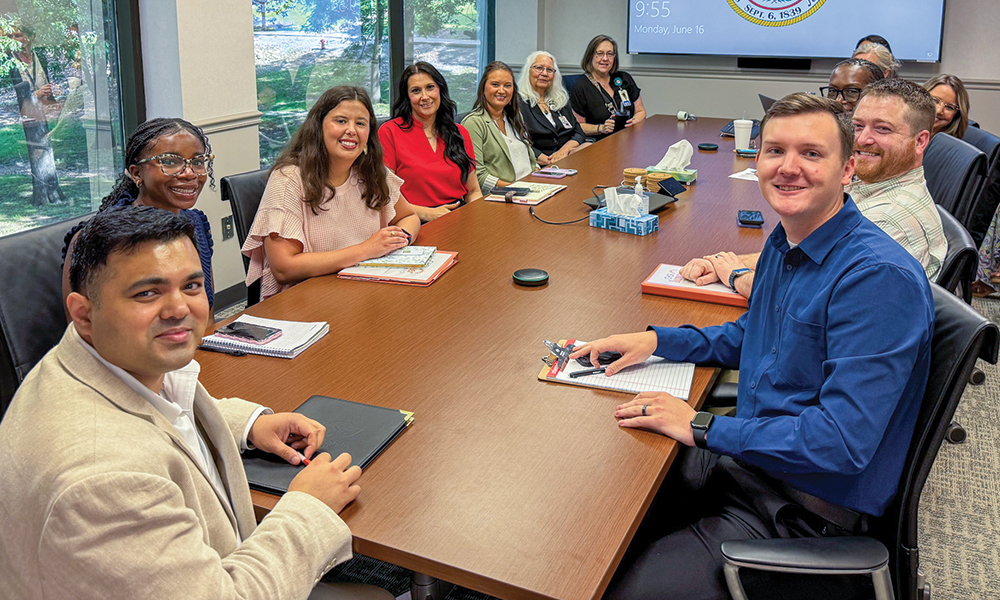
leaders to improve clinical systems.
Lean is all about identifying and removing waste in a system while optimizing resources,
and Marshall has industrial expertise in this area. She spent nearly 25 years working
for an international manufacturing company, owned a small business and consulted in
improving health care workflow design.
“We’re not redirecting medical protocols,” Marshall said. “We’re teaching students
how to observe work as it happens, understand the value added and address the barriers
to good outcomes.”
Before their second year of medical school, interns observe clinical processes, gather
data and analyze findings to solve real problems while learning about hospital management.
In the internship’s simulation stage, students enter mock hospital rooms with mannequin
patients. As if they’re playing a serious game of “I Spy,” the interns are tasked
with spotting hazards in the care delivery process, from misplaced cords to fake “blood”
on the floor.
Paramel partnered with the OSU Simulation Center for this aspect of internship training.
They cleverly devised these “wrong room” scenarios for students to collaborate, follow
procedural rules and adapt to unpredictable circumstances.
These skills translate to the consultation phase, where CHSI and the Lean interns
help a hospital with a real issue. When they worked with the OSU Medical Center to
reduce emergency department wait times for inpatient beds, a revelation emerged.
After collecting and digging into data, the researchers realized several delays happened
when hospital staff couldn’t see important information due to a technology flaw or
barrier, therefore making suboptimal decisions for patient care coordination. To describe
this issue, Erdmann coined the term “digital blindness” and introduced it to fellow
researchers at national conferences.
“We think of technology as improving efficiency,” Erdmann said. “This research reveals
how it can erode efficiency without optimization testing.”
In August 2024, the CHSI staff and the Lean interns published their findings in the
UC Irvine Western Journal of Emergency Medicine: Integrating Emergency Care with Population
Health. OSU Medical Center followed CHSI’s guidance to gain an estimated 689 hours
of added capacity over nine months.
The breakthrough happened because CHSI used data to spot patterns no one would otherwise
notice.
What is the impact?
Like a medical condition, an inefficiency in the care delivery process requires careful
diagnosis and treatment.
“Health care is very complex, and we’re trying to knock down those barriers to access
and efficiency,” Erdmann said.
CHSI used this approach to solve a mystery for a pediatric clinic in Muskogee.
Several years ago, the clinic had a baffling, recurring issue of patients missing
appointments.
When Erdmann and Paramel reviewed the data, they realized most of these patients lived
no more than 10 miles from the clinic but needed a ride. Although some had transportation, it wasn’t
consistently available or reliable.
CHSI intervened and ran a pilot. When someone scheduled an appointment, the scheduler
would immediately ask, “Do you need a ride?” If the caller said yes, then Yellow Checker
Cab Tulsa provided no-cost transportation for the patient to the clinic.
Over eight weeks, no patient missed their ride.
This initiative deterred costly misused emergency room visits, while the pediatric
clinic avoided the financial burden of no-shows. Since this successful pilot, CHSI
has continued its work to increase access to transportation.
One simple question — “Do you need a ride?” — could make a difference between a child
receiving treatment at a pediatric clinic or struggling with illness that might lead
to an ER visit.
One updated setting in a hospital’s technology system could help an emergency department
improve patient outflow.
CHSI analyzes the up-close details to make a large-scale difference for all parties
involved in health care.
“You need to make sure that you’re able to serve all the patients that you have in
your community,” Paramel said. “You can only make solutions once you find out the
problems. Looking at data is really something that drives change and efficiency.”
Story by: Hallie Hart | Discover@Spears Magazine
Photos by: Matt Barnard, Aaron Murphy and provided by Ipe Paramel
link
More Stories
5 Innovations Strengthening the Rural Health Care Workforce
Innovation in healthcare roundup: Sword Intelligence, Barney Recovery, Nuffield Health
Sanford Health Joins Industry Leaders to Highlight Innovation Improving Access to Care