



The latest innovations in healthcare, including an AI platform, adaptive radiotherapy, addiction treatment, infection prevention accreditation, treating myeloma and expansion at Westfield London.
Sword Intelligence launches in the UK
Sword Intelligence, an AI-driven operational platform designed to help healthcare providers manage growing waiting lists, has launched in the UK and Europe. The organisation is already supporting the development of a national AI-powered front door in Greece for ten million citizens, integrating AI into triage and care coordination to expand clinical capacity. By automating non-clinical workflows such as outreach, scheduling, and follow-up, the platform allows hospitals to manage demand more effectively without requiring significant additional infrastructure or workforce investment.
The platform was originally developed to solve operational challenges for Sword Health, which already operates across 20 NHS Trusts in the UK. Built on real-world experience across three continents, Sword Intelligence draws on data from tens of millions of AI-supported care sessions. In the UK, the company’s focus includes supporting first response in the community and enabling faster access to specialist hospital care.
Mark Ratnarajah, clinical director of special operations at the firm, emphasised the practical application of the technology in tackling systemic bottlenecks. “AI dominates conferences and board conversations, but real impact is achieved at the operational level. Sword Intelligence focuses on applying responsible AI to the most pressing challenges facing the NHS – particularly access and waiting lists – at scale,” he said.
The team is currently engaging with NHS organisations and Integrated Care Boards to co-create bespoke AI agents. This modular approach allows for the rapid assembly and deployment of AI capabilities.
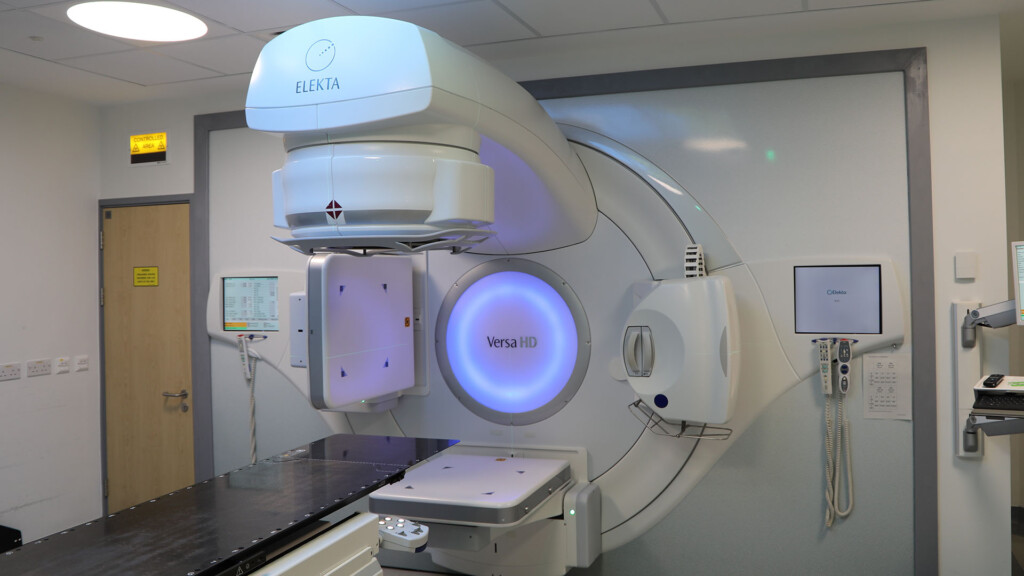
The Royal Marsden NHS Foundation Trust delivers online adaptive radiotherapy
The Royal Marsden NHS Foundation Trust is the first to deliver online adaptive radiotherapy (oART) using an Elekta linear accelerator (linac). While oART has traditionally required specialised, purpose-built machinery, this demonstrates that the treatment can be performed on standard linacs already in use across the NHS.
Clinicians can now tailor radiation doses to a patient’s specific anatomy in real-time during each treatment session.
This approach is a shift from traditional radiotherapy, which relies on static treatment plans created from initial CT scans. Because a patient’s anatomy can change due to weight fluctuations or organ movement – such as bladder filling – traditional plans often include larger safety margins of healthy tissue. Online adaptive radiotherapy accounts for these subtle daily changes, allowing for highly targeted treatment that minimises damage to surrounding healthy organs and reduces the severity of patient side effects.
Shaista Hafeez, consultant clinical oncologist at The Royal Marsden, noted that the ability to deliver oART on widely available equipment is a “significant step forward” for cancer care in the UK.
Supported by funding from The Royal Marsden Cancer Charity, the team hopes this breakthrough will pave the way for wider national adoption, making personalised, high-precision radiotherapy accessible to a greater number of patients across the country.
Barney Recovery launches addiction treatment platform
London-based technology company Barney Recovery has launched a web platform and mobile application designed to reduce relapse rates in the addiction treatment sector. Developed by addiction counsellors and rehab founders, the dual-platform system make continuous two-way engagement between treatment centres and their alumni easier. The initiative addresses a gap in post-treatment care, specifically targeting the 90-day period following residential rehab, where studies suggest relapse rates can be as high as 70%.
The app provides daily check-ins and ongoing therapy, while simultaneously offering treatment centres an analytics dashboard to monitor outcomes and measure programme effectiveness. This data-driven approach marks a shift for the sector, providing a reporting tool to track alumni success rates. The Office for National Statistics indicates a 6% rise in the number of adults in contact with substance misuse services over the past year.
Cheshire-based residential clinic Delamere is among the first to adopt the technology, integrating the platform into its existing Bloom aftercare programme. The clinic intends to use the resulting data to support its Knowledge Transfer Partnership study with Manchester Metropolitan University, which is currently measuring the long-term effectiveness of addiction treatment.
Tom Osborne, co-founder and chief executive of Barney Recovery, was inspired to build the platform following the loss of a close friend to addiction in 2018. Speaking on the launch, Osborne said: “Too many people fall through the cracks after treatment, and we built Barney to change that. Our dual platform allows treatment centres to support alumni consistently, strengthen outcomes, and offer connection when it’s needed most.”
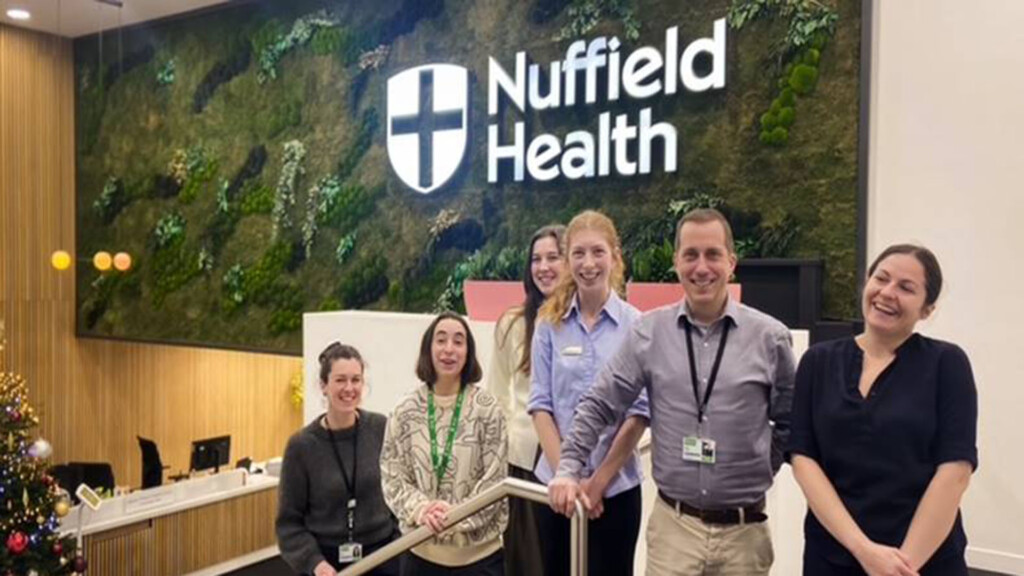
Nuffield Health leads with ANTT infection prevention accreditation
Nuffield Health has become one of the UK’s largest healthcare providers to achieve the gold standard accreditation in Aseptic Non Touch Technique (ANTT) across its clinical services. This national standard for infection prevention applies to all invasive procedures, ranging from finger-prick blood tests and wound care to complex surgical operations. The accreditation covers more than 90 sites, including 35 hospitals as well as medical centres and fitness and wellbeing clubs that offer clinical treatments.
The gold status signals a high level of clinical assurance, indicating that patients can expect a minimised risk of healthcare-associated infections regardless of which Nuffield Health facility they visit. To meet this benchmark, the organisation had to demonstrate excellence across its infection prevention policies, staff training, and rigorous audit processes. Reaching this level is considered a significant challenge, with only a limited number of healthcare providers nationally meeting the criteria for gold accreditation to date.
“This recognition reflects the dedication of our clinical teams, the strength of our governance systems, and our commitment to delivering safe, high-quality care,” said Alison McCourt, chief clinical and quality officer at Nuffield Health.
New approach to detecting and treating myeloma
Karthik Ramasamy, clinical director for the SACT Clinical Reference Group at GenesisCare, is heading the SECURE study, a major clinical trial aimed at transforming the detection and treatment of early-stage blood cancer. Myeloma, which affects plasma cells in the bone marrow, is traditionally only treated once it becomes active and symptomatic. The SECURE study instead focuses on MGUS (monoclonal gammopathy of undetermined significance), a common precursor condition, to understand why some patients progress to full-scale cancer while others do not.
The research aims to move the clinical approach away from the traditional watch-and-wait strategy for smouldering myeloma, an early, asymptomatic stage of the disease.
For many patients, the uncertainty of monitoring without intervention is a significant burden. “Patients often tell me it’s the waiting that’s hardest. They know there’s something wrong in their blood, but they can’t do anything about it. Our goal is to change that – to move from monitoring to managing,” said Ramasamy.
By collecting blood samples and lifestyle data over several years, the team hopes to develop a national biological profile of early myeloma. This data could eventually allow for personalised monitoring and even short courses of preventive therapy for high-risk individuals, similar to established screening programmes for breast or bowel cancer.

Westfield London strengthens health and wellness offering at The Village
Unibail-Rodamco-Westfield (URW) has expanded its health and wellness precinct at Westfield London, signing three new tenants to its The Village destination. The move expands the existing 50,000 square foot health hub on Level 1, reflecting a strategic shift in the retail sector towards providing essential non-emergency medical services in accessible environments. Research cited by URW suggests that nearly 60% of UK adults are now interested in accessing healthcare within a retail setting.
Constantin Wiesmann, director of leasing for Northern Europe at Unibail-Rodamco-Westfield, highlighted the changing nature of the high street and its role in public health. “Health and wellness is no longer a niche category; it’s becoming a strategic anchor for mixed-use retail destinations,” he said.
Leading the new additions is global diagnostics pioneer Randox Health, which will open a clinic focused on preventative medicine. The facility will offer full-body health checks and specialised blood testing. This is joined by LoveMyLife Doctors, which marks the arrival of premium private GP services at the centre. Set to open in the Spring, the two-room clinic provides convenient access to primary care that aligns with modern patient schedules.
Rounding out the latest wave of clinical signings is The Gloss, a female-founded wellness hub. Specialising in advanced skincare and medical aesthetics, the clinic will offer treatments ranging from precision Botox and expert facials to holistic wellness massages.
These new providers join a medical line-up that already includes EuroEyes for laser eye surgery, Effect Doctors for proactive IV therapies, and Prince Pharmacy, further cementing the role of retail destinations as holistic healthcare hubs.
link
More Stories
5 Innovations Strengthening the Rural Health Care Workforce
Sanford Health Joins Industry Leaders to Highlight Innovation Improving Access to Care
Rural health care leaders to take part in Willcoxon Innovation in Health Sciences Summit | News