

Dousay, T. A. & Hall, C. Alexa, tell me about using a virtual assistant in the classroom. In Proceedings of EdMedia: World Conference on Educational Media and Technology 1413–1419. (Association for the Advancement of Computing in Education (AACE), 2018).
Song, Y. W. User Acceptance of an Artificial Intelligence (AI) Virtual Assistant: An Extension of the Technology Acceptance Model. Doctoral Dissertation (2019).
Arora, S., Athavale, V. A. & Himanshu Maggu, A. Artificial intelligence and virtual assistant—working model. In Mobile Radio Communications and 5G Networks. Lecture Notes in Networks and Systems, vol 140 (eds Marriwala, N. et al.) (Springer, 2021).
Zhang, S., Meng, Z., Chen, B., Yang, X. & Zhao, X. Motivation, social emotion, and the acceptance of artificial intelligence virtual assistants—Trust-based mediating effects. Front. Psychol. 12, 95. (2021).
Google Scholar
Doraiswamy, P. M. et al. Empowering 8 billion minds: enabling better mental health for all via the ethical adoption of technologies. NAM Perspect.. (2019).
Murphy, K. et al. Artificial intelligence for good health: a scoping review of the ethics literature. BMC Med. Ethics. 22, 14. (2021).
Google Scholar
Kashive, N., Powale, L. & Kashive, K. Understanding user perception toward artificial intelligence (AI) enabled e-learning. Int. J. Inform. Learn. Technol. 38, 1–19. (2021).
Google Scholar
Kaye, S. A., Lewis, I., Forward, S. & Delhomme, P. A priori acceptance of highly automated cars in Australia, France, and Sweden: A theoretically-informed investigation guided by the TPB and UTAUT. Accid. Anal. Prev. 137, 105441. (2020).
Google Scholar
Becker, D. Possibilities to improve online mental health treatment: recommendations for future research and developments. In Advances in Information and Communication Networks. FICC 2018. Advances in Intelligent Systems and Computing, vol. 886 (eds Arai, K. et al.) (Springer, 2019).
Hirani, R. et al. Artificial intelligence and healthcare: a journey through history, present innovations, and future possibilities. Life 14, 557 (2024).
Google Scholar
Anchitaalagammai, J. V. et al. Predictive health assistant: AI-driven disease projection tool. In. 2024 11th International Conference on Reliability, Infocom Technologies and Optimization (Trends and Future Directions) (ICRITO), Noida, India 1–6. (2024).
Hauser-Ulrich, S., Künzli, H., Meier-Peterhans, D. & Kowatsch, T. A smartphone-based health care chatbot to promote self-management of chronic pain (SELMA): pilot randomized controlled trial. JMIR Mhealth Uhealth. 8, e15806. (2020).
Google Scholar
Divya, S., Indumathi, V., Ishwarya, S., Priyasankari, M. & Devi, S. K. A self-diagnosis medical chatbot using artificial intelligence. J. Web Dev. Web Designing. 3, 1–7 (2018).
Muneer, S. et al. Explainable AI-driven chatbot system for heart disease prediction using machine learning. Int. J. Adv. Comput. Sci. Appl. 15, 1 (2024).
Maeda, E. et al. Promoting fertility awareness and preconception health using a chatbot: a randomized controlled trial. Reprod. Biomed. Online. 41, 1133–1143. (2020).
Google Scholar
Davis, C. R., Murphy, K. J., Curtis, R. G. & Maher, C. A. A process evaluation examining the performance, adherence, and acceptability of a physical activity and diet artificial intelligence virtual health assistant. Int. J. Environ. Res. Public Health. 17 (23), 9137. (2020).
Google Scholar
Fitzpatrick, K. K., Darcy, A. & Vierhile, M. Delivering cognitive behavior therapy to young adults with symptoms of depression and anxiety using a fully automated conversational agent (Woebot): A randomized controlled trial. JMIR Ment Health. 4, e19. (2017).
Google Scholar
Donadello, I. & Dragoni, M. AI-enabled persuasive personal health assistant. Social Netw. Anal. Min. 12, 106. (2022).
Google Scholar
Chatterjee, A., Prinz, A., Gerdes, M. & Martinez, S. Digital interventions on healthy lifestyle management: systematic review. J. Med. Internet Res. 23, e26931. (2021).
Google Scholar
Davis, C. R., Murphy, K. J., Curtis, R. G. & Maher, C. A. A process evaluation examining the performance, adherence, and acceptability of a physical activity and diet artificial intelligence virtual health assistant. Int. J. Environ. Res. Public Health. 17 (23), 9137. (2020).
Google Scholar
Melnyk, B. M. et al. Interventions to improve mental health, well-being, physical health, and lifestyle behaviors in physicians and nurses: a systematic review. Am. J. Health Promotion. 34, 929–941 (2020).
Google Scholar
Lee, D. & Yoon, S. N. Application of artificial intelligence-based technologies in the healthcare industry: opportunities and challenges. Int. J. Environ. Res. Public Health. 18, 1 (2021).
Gao, X., He, P., Zhou, Y. & Qin, X. Artificial intelligence applications in smart healthcare: a survey. Future Internet. 16, 1 (2024).
Google Scholar
Laker, B. & Currell, E. ChatGPT: a novel AI assistant for healthcare messaging—a commentary on its potential in addressing patient queries and reducing clinician burnout. BMJ Lead. 8, 147. (2024).
Google Scholar
Dragoni, M., Rospocher, M., Bailoni, T., Maimone, R. & Eccher, C. Semantic technologies for healthy lifestyle monitoring. In The Semantic Web–ISWC 2018. ISWC 2018. Lecture Notes in Computer Science, vol 11137 (eds Vrandečić, D. et al.) (Springer, 2018).
Babel, A., Taneja, R., Mondello Malvestiti, F., Monaco, A. & Donde, S. Artificial intelligence solutions to increase medication adherence in patients with non-communicable diseases. Front. Digit. Health. 3, 69. (2021).
Google Scholar
Bickmore, T. W. et al. Patient and consumer safety risks when using conversational assistants for medical information: an observational study of Siri, Alexa, and Google assistant. J. Med. Internet Res. 20, e11510. (2018).
Google Scholar
Bulla, C., Parushetti, C., Teli, A., Aski, S. & Koppad, S. A review of AI based medical assistant chatbot. Res. Appl. Web Dev. Des. 3 (2), 1–14. (2020).
Google Scholar
Shevtsova, D. et al. Trust in and acceptance of artificial intelligence applications in medicine: mixed methods study. JMIR Hum. Factors. 11, e47031. (2024).
Google Scholar
Gerke, S., Minssen, T. & Cohen, G. Ethical and legal challenges of artificial intelligence-driven healthcare. In Artificial Intelligence in Healthcare 295–336 (Academic Press, 2020).
Hlávka, J. P. Security, privacy, and information-sharing aspects of healthcare artificial intelligence. In Artificial Intelligence in Healthcare 235–270 (Academic Press, 2020).
Rigby, M. J. Ethical dimensions of using artificial intelligence in health care. AMA J. Ethics. 21, 121–124. (2019).
Google Scholar
Xiong, Y., Shi, Y., Pu, Q. & Liu, N. More trust or more risk? User acceptance of artificial intelligence virtual assistant. Hum. Factors Ergon. Manuf. Serv. Ind. 34, 190–205. (2024).
Google Scholar
Ostrom, A. L., Fotheringham, D. & Bitner, M. J. in Handbook of Service Science. Vol. 2, 77–103 (eds Maglio, P. P.) (Springer, 2019).
Kelly, S., Kaye, S. A. & Oviedo-Trespalacios, O. What factors contribute to the acceptance of artificial intelligence? A systematic review. Telematics Inform. 77, 101925. (2023).
Google Scholar
Davis, F. D. Perceived usefulness, perceived ease of use, and user acceptance of information technology. MIS Q. 13, 319–340. (1989).
Google Scholar
Kirlidog, M. & Kaynak, A. Technology acceptance model and determinants of technology rejection. Int. J. Inform. Syst. Social Change. 2, 1–12. (2011).
Google Scholar
Zhan, X., Abdi, N., Seymour, W. & Such, J. Healthcare voice AI assistants: factors influencing trust and intention to use. Proc. ACM Hum. Comput. Interact. 8 (62). (2024).
Alhashmi, S. F. S. et al. Proceedings of the International Conference on Advanced Intelligent Systems and Informatics (eds Ella Hassanien, A. et al.) 393–405 (Springer, 2019).
Lin, H. C., Ho, C. F. & Yang, H. Understanding adoption of artificial intelligence-enabled Language e-learning system: an empirical study of UTAUT model. Int. J. Mob. Learn. Organisation. 16, 74–94. (2021).
Google Scholar
So, S., Ismail, M. R. & Jaafar, S. Exploring acceptance of artificial intelligence amongst healthcare personnel: a case in a private medical centre. Int. J. Adv. Eng. Manag. 3, 56–65 (2021).
van Bussel, M. J. P., Odekerken–Schröder, G. J., Ou, C., Swart, R. R. & Jacobs, M. J. G. Analyzing the determinants to accept a virtual assistant and use cases among cancer patients: a mixed methods study. BMC Health Serv. Res. 22, 890. (2022).
Google Scholar
Mcknight, D. H., Carter, M., Thatcher, J. B. & Clay, P. F. Trust in a specific technology: an investigation of its components and measures. ACM Trans. Manag Inf. Syst. 2, 2. (2011).
Google Scholar
Glikson, E. & Woolley, A. W. Human trust in artificial intelligence: review of empirical research. Acad. Manag. Ann. 14, 627–660. (2020).
Google Scholar
Dwivedi, Y. K., Rana, N. P., Jeyaraj, A., Clement, M. & Williams, M. D. Re-examining the unified theory of acceptance and use of technology (UTAUT): towards a revised theoretical model. Inform. Syst. Front. 21, 719–734. (2019).
Google Scholar
Liao, C., Palvia, P. & Chen, J. L. Information technology adoption behavior life cycle: toward a technology continuance theory (TCT). Int. J. Inf. Manag. 29, 309–320. (2009).
Google Scholar
Pillai, R. & Sivathanu, B. Adoption of AI-based chatbots for hospitality and tourism. Int. J. Contemp. Hospitality Manage. 32, 3199–3226. (2020).
Google Scholar
Ajzen, I. & Fishbein, M. Attitude-behavior relations: A theoretical analysis and review of empirical research. Psychol. Bull. 84, 888–918. (1977).
Google Scholar
Ajzen, I. The Theory of planned behavior. In Organizational Behavior and Human Decision Processes (1991).
Rogers, E. M., Singhal, A. & Quinlan, M. M. An Integrated Approach to Communication Theory and Research 432–448 (Routledge, 2014).
Venkatesh, V., Morris, M. G., Davis, G. B. & Davis, F. D. User acceptance of information technology: toward a unified view. MIS Q. 27, 425–478. (2003).
Google Scholar
Venkatesh, V., Thong, J. Y. & Xu, X. Consumer acceptance and use of information technology: extending the unified theory of acceptance and use of technology. MIS Q. 1, 157–178 (2012).
Google Scholar
Williams, M. D., Rana, N. P. & Dwivedi, Y. K. The unified theory of acceptance and use of technology (UTAUT): a literature review. J. Enterp. Inform. Manage. 28, 443–488. (2015).
Google Scholar
Xue, L., Rashid, A. M. & Ouyang, S. The unified theory of acceptance and use of technology (UTAUT) in higher education: A systematic review. SAGE Open 2024. (2024).
Abeysekera, K., Jayasundara, C. & Withanaarachchi, A. Exploring digital library adoption intention through UTAUT: A systematic review. J. Desk Res. Rev. Anal. 2, 1 (2024).
Ronaghi, M. H. & Forouharfar, A. A contextualized study of the usage of the internet of things (IoTs) in smart farming in a typical middle Eastern country within the context of unified theory of acceptance and use of technology model (UTAUT). Technol. Soc. 63, 101415. (2020).
Google Scholar
Venkatesh, V. Adoption and use of AI tools: a research agenda grounded in UTAUT. Ann. Oper. Res. 308, 641–652. (2022).
Google Scholar
Dash, A. & Sahoo, A. K. Exploring patient’s intention towards e-health consultation using an extended UTAUT model. J. Enabling Technol. 16, 266–279. (2022).
Google Scholar
Zeebaree, M., Agoyi, M. & Aqel, M. Sustainable adoption of e-government from the UTAUT perspective. Sustainability 14, 1 (2022).
Google Scholar
Jahanshahi, D., Tabibi, Z. & van Wee, B. Factors influencing the acceptance and use of a bicycle sharing system: applying an extended unified theory of acceptance and use of technology (UTAUT). Case Stud. Transp. Policy. 8, 1212–1223. (2020).
Google Scholar
Tian, W., Ge, J., Zhao, Y. & Zheng, X. AI chatbots in Chinese higher education: adoption, perception, and influence among graduate students—an integrated analysis utilizing UTAUT and ECM models. Front. Psychol. 15, 549. (2024).
Google Scholar
Ali, K. & Freimann, K. Applying the Technology Acceptance Model to AI Decisions in the Swedish Telecom Industry (2021).
Gao, B. & Huang, L. Understanding interactive user behavior in smart media content service: an integration of TAM and smart service belief factors. Heliyon 5, 983. (2019).
Google Scholar
Gursoy, D., Chi, O. H., Lu, L. & Nunkoo, R. Consumers acceptance of artificially intelligent (AI) device use in service delivery. Int. J. Inf. Manag. 49, 157–169. (2019).
Google Scholar
Li, K. Determinants of college students’ actual use of AI-based systems: an extension of the technology acceptance model. Sustainability 15, 1 (2023).
Fan, W., Liu, J., Zhu, S. & Pardalos, P. M. Investigating the impacting factors for the healthcare professionals to adopt artificial intelligence-based medical diagnosis support system (AIMDSS). Ann. Oper. Res. 294, 567–592. (2020).
Google Scholar
Lin, H. C., Tu, Y. F., Hwang, G. J. & Huang, H. From precision education to precision medicine factors affecting medical staffs intention to learn to use AI applications in hospitals. Educational Technol. Soc. 24, 123–137 (2021).
Prakash, A. V. & Das, S. Medical practitioner’s adoption of intelligent clinical diagnostic decision support systems: A mixed-methods study. Inf. Manag. 58, 103524. (2021).
Google Scholar
Zarifis, A., Peter, K., Azadegan, A. & and Evaluating if trust and personal information privacy concerns are barriers to using health insurance that explicitly utilizes AI. J. Internet Commer. 20, 66–83. (2021).
Google Scholar
Choi, Y. A study of employee acceptance of artificial intelligence technology. Eur. J. Manage. Bus. Econ. 30, 318–330. (2021).
Google Scholar
Zarifis, A., Kawalek, P. & Azadegan, A. Evaluating if trust and personal information privacy concerns are barriers to using health insurance that explicitly utilizes AI. J. Internet Commer. 20, 66–83. (2021).
Google Scholar
Bansal, G., Zahedi, F. M. & Gefen, D. The impact of personal dispositions on information sensitivity, privacy concern and trust in disclosing health information online. Decis. Support Syst. 49, 138–150. (2010).
Google Scholar
Liu, K. & Tao, D. The roles of trust, personalization, loss of privacy, and anthropomorphism in public acceptance of smart healthcare services. Comput. Hum. Behav. 127, 107026. (2022).
Google Scholar
Guo, X., Zhang, X. & Sun, Y. The privacy–personalization paradox in mHealth services acceptance of different age groups. Electron. Commer. Res. Appl. 16, 55–65. (2016).
Google Scholar
Choung, H., David, P. & Ross, A. Trust in AI and its role in the acceptance of AI technologies. Int. J. Human–Computer Interact. 39, 1727–1739. (2023).
Google Scholar
Lancelot Miltgen, C., Popovič, A. & Oliveira, T. Determinants of end-user acceptance of biometrics: integrating the big 3 of technology acceptance with privacy context. Decis. Support Syst. 56, 103–114. (2013).
Google Scholar
Al-Sharafi, M. A. et al. Generation Z use of artificial intelligence products and its impact on environmental sustainability: A cross-cultural comparison. Comput. Hum. Behav. 143, 107708. (2023).
Google Scholar
Khechine, H., Lakhal, S. & Ndjambou, P. A meta-analysis of the UTAUT model: eleven years later. Can. J. Administrative Sci. 33, 138–152. (2016).
Google Scholar
Andrews, J. E., Ward, H. & Yoon, J. UTAUT as a model for Understanding intention to adopt AI and related technologies among librarians. J. Acad. Librariansh. 47, 102437. (2021).
Google Scholar
Chatterjee, S., Rana, N. P., Khorana, S., Mikalef, P. & Sharma, A. Assessing organizational users’ intentions and behavior to AI integrated CRM systems: a meta-UTAUT approach. Inform. Syst. Front. 25, 1299–1313. (2023).
Google Scholar
Sharma, P., Taneja, S., Kumar, P., Özen, E. & Singh, A. Application of the UTAUT model toward individual acceptance: emerging trends in artificial intelligence-based banking services. Int. J. Electron. Finance. 13, 352–366. (2024).
Google Scholar
Nordhoff, S. et al. Using the UTAUT2 model to explain public acceptance of conditionally automated (L3) cars: A questionnaire study among 9,118 car drivers from eight European countries. Transp. Res. Part. F: Traffic Psychol. Behav. 74, 280–297. (2020).
Google Scholar
Agarwal, R. & Prasad, J. The antecedents and consequents of user perceptions in information technology adoption. Decis. Support Syst. 22, 15–29. (1998).
Google Scholar
Yakubu, M. N., David, N. & Abubakar, N. H. Students’ behavioural intention to use content generative AI for learning and research: A UTAUT theoretical perspective. Educ. Inform. Technol. (2025).
Google Scholar
Cheng, M., Li, X. & Xu, J. Promoting healthcare workers’ adoption intention of artificial-intelligence-assisted diagnosis and treatment: the chain mediation of social influence and human–computer trust. Int. J. Environ. Res. Public Health. 19, 1 (2022).
Google Scholar
Kidwell, B. & Jewell, R. D. An examination of perceived behavioral control: internal and external influences on intention. Psychol. Mark. 20, 625–642. (2003).
Google Scholar
Sichone, J., Milano, R. J. & Kimea, A. J. The influence of facilitating conditions, perceived benefits, and perceived risk on intention to adopt e-filing in Tanzania. Bus. Manage. Rev. 20, 50–59 (2017).
Vimalkumar, M., Sharma, S. K., Singh, J. B. & Dwivedi, Y. K. Okay Google, what about my privacy?’: user’s privacy perceptions and acceptance of voice based digital assistants. Comput. Hum. Behav. 120, 106763. (2021).
Google Scholar
Muhammad Sohaib, Z., Zunaina, A., Arshma, M. & Muhammad, A. Determining behavioural intention to use artificial intelligence in the hospitality sector of Pakistan: an application of UTAUT model. J. Tourism Hospitality Serv. Industries Res. 4, 1–21. (2024).
Google Scholar
Lee, J. D. & See, K. A. Trust in automation: designing for appropriate reliance. Hum. Factors. 46, 50–80 (2004).
Google Scholar
Alalwan, A. A., Dwivedi, Y. K. & Rana, N. P. Factors influencing adoption of mobile banking by Jordanian bank customers: extending UTAUT2 with trust. Int. J. Inf. Manag. 37, 99–110. (2017).
Google Scholar
Söllner, M., Hoffmann, A. & Leimeister, J. M. Why different trust relationships matter for information systems users. Eur. J. Inform. Syst. 25, 274–287. (2016).
Google Scholar
Faqih, K. M. S. Internet shopping in the Covid-19 era: investigating the role of perceived risk, anxiety, gender, culture, and trust in the consumers’ purchasing behavior from a developing country context. Technol. Soc. 70, 101992. (2022).
Google Scholar
Al-Gahtani, S. S. Modeling the electronic transactions acceptance using an extended technology acceptance model. Appl. Comput. Inf. 9, 47–77. (2011).
Google Scholar
Zhou, T. An empirical examination of initial trust in mobile payment. Wireless Pers. Commun. 77, 1519–1531. (2014).
Google Scholar
Lee, J. H. & Song, C. H. Effects of trust and perceived risk on user acceptance of a new technology service. Social Behav. Personality. 41, 587–597. (2013).
Google Scholar
Seo, K. H. & Lee, J. H. The emergence of service robots at restaurants: integrating trust, perceived risk, and satisfaction. Sustainability 13, 4431 (2021).
Google Scholar
Namahoot, K. S. & Laohavichien, T. Assessing the intentions to use internet banking. Int. J. Bank. Mark. 36, 256–276. (2018).
Google Scholar
Kesharwani, A. & Singh Bisht, S. The impact of trust and perceived risk on internet banking adoption in India. Int. J. Bank. Mark. 30, 303–322. (2012).
Google Scholar
Chao, C. Y., Chang, T. C., Wu, H. C., Lin, Y. S. & Chen, P. C. The interrelationship between intelligent agents’ characteristics and users’ intention in a search engine by making beliefs and perceived risks mediators. Comput. Hum. Behav. 64, 117–125. (2016).
Google Scholar
Schwesig, R., Brich, I., Buder, J., Huff, M. & Said, N. Using artificial intelligence (AI)? Risk and opportunity perception of AI predict People’s willingness to use AI. J. Risk Res. 26, 1053–1084. (2023).
Google Scholar
Udo, G. J., Bagchi, K. K. & Kirs, P. J. An assessment of customers’ e-service quality perception, satisfaction and intention. Int. J. Inf. Manag. 30, 481–492. (2010).
Google Scholar
Kamal, S. A., Shafiq, M. & Kakria, P. Investigating acceptance of telemedicine services through an extended technology acceptance model (TAM). Technol. Soc. 60, 101212. (2020).
Google Scholar
Hofstede, G. Culture’s Consequences: International Differences in Work-Related Values, Vol. 5 (SAGE, 1984).
Byrne, B. M. Structural equation modeling with AMOS, EQS, and LISREL: Comparative approaches to testing for the factorial validity of a measuring instrument. Int. J. Test. 1, 55–86 (2001).
Lenzner, T., Kaczmirek, L. & Lenzner, A. Cognitive burden of survey questions and response times: A psycholinguistic experiment. Appl. Cogn. Psychol. 24, 1003–1020. (2010).
Google Scholar
Hair, J. F., Black, W. C., Babin, B. J. & Anderson, R. E. Advanced diagnostics for multiple regression: A supplement to multivariate data analysis. In Advanced Diagnostics for Multiple Regression: A Supplement to Multivariate Data Analysis (2010).
Hair, J. F. Multivariate Data Analysis (2009).
Bagozzi, R. P. Structural equation models are modelling tools with many ambiguities: comments acknowledging the need for caution and humility in their use. J. Consumer Psychol. 20, 208–214. (2010).
Google Scholar
Chin, W. W. Commentary: issues and opinion on structural equation modeling. MIS Q. 22, 7–16 (1998).
Nachtigall, C., Kroehne, U., Funke, F. & Steyer, R. Pros and cons of structural equation modeling. Methods Psychol. Res. Online. 8, 1–22 (2003).
Dash, G., Paul, J. & CB-SEM vs PLS-SEM methods for research in social sciences and technology forecasting. Technol. Forecast. Soc. Chang. 173, 121092. (2021).
Google Scholar
Hair, J. F., Matthews, L. M., Matthews, R. L. & Sarstedt, M. PLS-SEM or CB-SEM: updated guidelines on which method to use. Int. J. Multivar. Data Anal. 1, 107–123. (2017).
Google Scholar
Tabachnick, B. G., Fidell, L. S. & Ullman, J. B. Using Multivariate Statistics, Vol. 5 (Pearson, 2007).
Fornell, C. & Larcker, D. F. Evaluating structural equation models with unobservable variables and measurement error. J. Mark. Res. 18, 39–50. (1981).
Google Scholar
Kline, P. Handbook of Psychological Testing (Routledge, 2013).
Li, W. A study on factors influencing designers’ behavioral intention in using AI-generated content for assisted design: perceived anxiety, perceived risk, and UTAUT. Int. J. Hum. Comput. Interact. 41, 1064–1077. (2025).
Google Scholar
Cao, G., Duan, Y., Edwards, J. S. & Dwivedi, Y. K. Understanding managers’ attitudes and behavioral intentions towards using artificial intelligence for organizational decision-making. Technovation 106, 102312. (2021).
Google Scholar
Arshad, S. Z., Zhou, J., Bridon, C., Chen, F. & Wang, Y. Proceedings of the Annual Meeting of the Australian Special Interest Group for Computer Human Interaction 352–360 (Association for Computing Machinery, 2015).
Frederiks, E. R., Stenner, K. & Hobman, E. V. Household energy use: applying behavioural economics to understand consumer decision-making and behaviour. Renew. Sustain. Energy Rev. 41, 1385–1394. (2015).
Google Scholar
Brown, J. B., Carroll, J., Boon, H. & Marmoreo, J. Women’s decision-making about their health care: views over the life cycle. Patient Educ. Couns. 48, 225–231. (2002).
Google Scholar
McGrath, C., Pargman, C., Juth, T., Palmgren, P. J. & N. & University teachers’ perceptions of responsibility and artificial intelligence in higher education—An experimental philosophical study. Computers Education: Artif. Intell. 4, 100139. (2023).
Google Scholar
Fiske, S. T. Social Beings: Core Motives in Social Psychology (Wiley, 2018).
Whittaker, J. K. & Garbarino, J. Social Support Networks: Informal Helping in the Human Services (Transaction Publishers, 1983).
Hogg, M. A. Individual Self, Relational Self, Collective Self 123–143 (Psychology Press, 2015).
Hether, H. J., Murphy, S. T. & Valente, T. W. It’s better to give than to receive: the role of social support, trust, and participation on health-related social networking sites. J. Health Communication. 19, 1424–1439 (2014).
Google Scholar
Chong, A. Y. L. Predicting m-commerce adoption determinants: A neural network approach. Expert Syst. Appl. 40, 523–530. (2013).
Google Scholar
Sarason, B. R. et al. Perceived social support and working models of self and actual others. J. Personal. Soc. Psychol. 60, 273 (1991).
Google Scholar
Dieter, D. G. Consumer Perception of Artificial Intelligence in US Healthcare (Indiana University of Pennsylvania, 2021).
Kim, G., Shin, B. & Lee, H. G. Understanding dynamics between initial trust and usage intentions of mobile banking. Inform. Syst. J. 19, 283–311. (2009).
Google Scholar
Wanner, J., Herm, L. V., Heinrich, K. & Janiesch, C. The effect of transparency and trust on intelligent system acceptance: evidence from a user-based study. Electron. Markets. 32, 2079–2102. (2022).
Google Scholar
Froomkin, A. M., Kerr, I. & Pineau, J. When AIs outperform Doctors: confronting the challenges of a tort-induced over-reliance on machine learning. Ariz L Rev. 61, 33 (2019).
Park, H., Borde, S. F. & Choi, Y. Determinants of insurance pervasiveness: a cross-national analysis. Int. Bus. Rev. 11, 79–96. (2002).
Google Scholar
Balakrishnan, J. & Dwivedi, Y. K. Role of cognitive absorption in Building user trust and experience. Psychol. Mark. 38, 643–668. (2021).
Google Scholar
Kyung, N. & Kwon, H. E. Rationally trust, but emotionally? The roles of cognitive and affective trust in laypeople’s acceptance of AI for preventive care operations. Prod. Oper. Manage. 1, 1. (2022).
Google Scholar
link
More Stories
WHO EMRO – Noncommunicable diseases
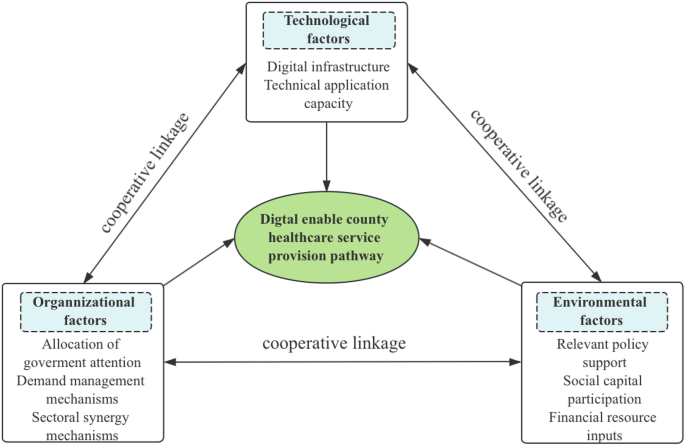
Exploring the pathways of digital technology driven healthcare service delivery in county-level regions
Telehealth Interventions to Improve Chronic Disease | Cardiovascular Disease Data, Tools, and Evaluation Resources