




Hurricane Melissa intensified to a powerful Category 5 early Monday as forecasters warned the storm would cause catastrophic flash flooding, life-threatening landslides and extremely strong winds across the Caribbean.
The U.S. National Hurricane Center in Miami warned people in Jamaica to go to shelters and stay there during the storm, with dangerous conditions beginning Monday and lasting through Tuesday.
Follow along for live coverage
Melissa is set to make landfall in Jamaica early Tuesday, before moving across southeastern Cuba Tuesday night as a Category 3 storm and across the southeastern Bahamas on Wednesday as a Category 2. Government officials in Jamaica are set to address the public at 11:30 a.m. Monday, as tropical storm conditions are already plaguing the island.

At 8 a.m. ET, the storm was located about 135 miles southwest of Kingston, the capital of Jamaica. It had maximum sustained winds of 160 miles per hour and was moving west at 3 miles per hour, putting it in the highest and most dangerous category on the Saffir-Simpson hurricane scale — and forecast to intensify even further, per the NHC.
The most powerful storm to hit the region since Hurricane Gilbert in 1988, Melissa will bring between 15 and 30 inches — and up to 40 inches — of rain to Jamaica, as well as extreme winds, extensive infrastructure damage and life-threatening storm surge along its southern coast, the hurricane center said.
It’s the third Category 5 of the 2025 season. The last time there were more than two storms of this strength in the same season was 20 years ago, in 2005. Melissa is also the latest Category 5 storm in an Atlantic hurricane season in 27 years, since Hurricane Mitch in 1998.
Some areas of eastern Jamaica could be inundated with up to 40 inches of rain, more than some areas of the country typically get in a year.
Wind speeds in mountainous areas could be 30% higher that the main storm, meaning potential winds of more than 200 mph.
Desmond Mackenzie, Jamaica’s minister of local government and community development, said Sunday night that 218 people were already in some of the country’s 881 shelters. As of Monday morning, all of the island’s shelters were open, but many were still not full.
Mackenzie said that many Jamaican communities “will not survive this flooding.”
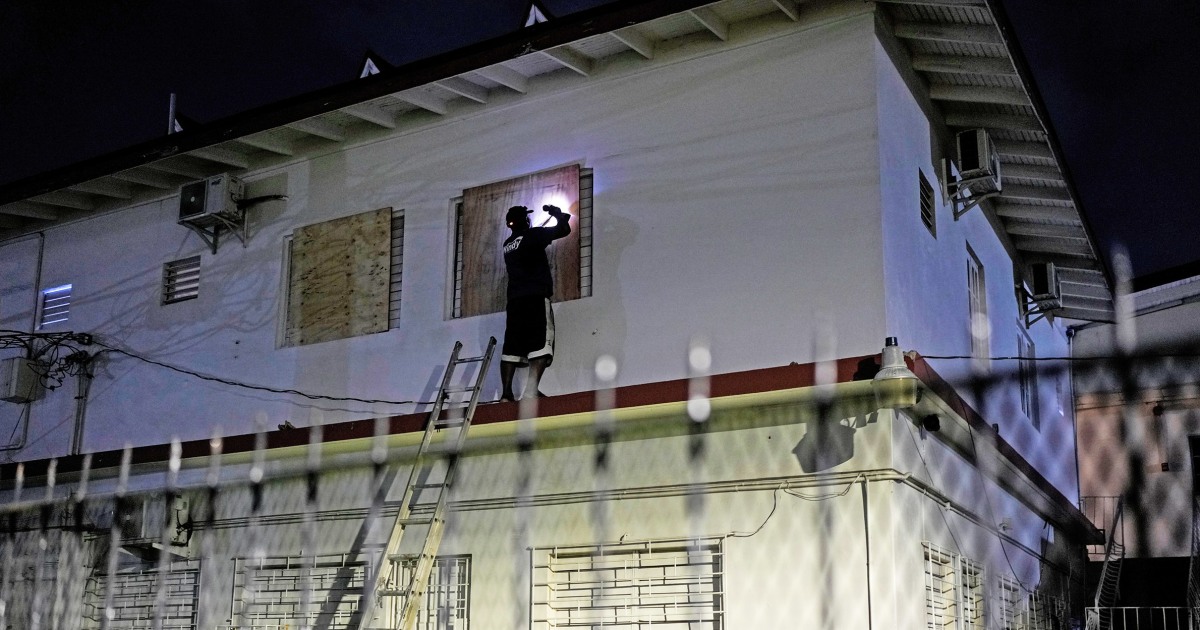
Jamaican residents were filling up gas canisters for their generators and boarding up windows to prepare for the intense wind and rain. Zookeepers in the capital city were relocating their animals ahead of the storm.
An American tourist who caught one of the last flights from the island said there was a lot of turbulence getting back to the United States.
“It was almost like getting out and watching the rain come behind us,” he said. “But luckily we made it.”
Others weren’t so lucky. Nicole Doyon, from Miami, was visiting the island for a yoga retreat, but couldn’t get out before the storm despite exhausting all of her options.
“There was nothing available. At this point, there are no options,” Doyon said.

Haiti and the Dominican Republic will also face catastrophic and life-threatening flash flooding by midweek, the hurricane center said, while Cuba is facing heavy rain, floods and landslides from Monday. There is also a hurricane watch for the central and southeastern Bahamas and the Turks and Caicos Islands.
So far, the storm has killed at least four people, three in Haiti and one in the Dominican Republic.

“Although interaction with Jamaica will lead to some weakening, Melissa is expected to reach southeastern Cuba as a major hurricane, and will also move across the southeastern Bahamas and be near Bermuda as a hurricane,” the hurricane center said in an analysis of the latest forecast.
link
More Stories
Swalwell leads but no Democrat secures party endorsement
Department of Homeland Security shuts down Global Entry while partial government shutdown remains in effect
South Coast travel ban lifted; motorists still urged to stay off roads as dig out continues