



Marques, I. C. P. & Ferreira, J. J. M. Digital transformation in the area of health: systematic review of 45 years of evolution. Health Technol. (Berl). 10 (3), 575–586 (2020).
Google Scholar
Altab, H. M. et al. Personal and organisational resources on electronic health usage intentions in an emerging economy. Telematics Inform. 71, 101832. (2022).
Google Scholar
Elvas, L. B., Serrão, C. & Ferreira, J. C. Sharing Health Information Using a Blockchain’, in Healthcarep. 170 (Multidisciplinary Digital Publishing Institute, 2023).
Seh, A. H. et al. ‘Healthcare data breaches: Insights and implications’, in Healthcare, Multidisciplinary Digital Publishing Institute, p. 133. (2020). https://doi.org/10.3390/healthcare8020133
Fusco, A., Dicuonzo, G., Dell’atti, V. & Tatullo, M. Blockchain in healthcare: insights on COVID-19. Int. J. Environ. Res. Public. Health. 17, 1–12. (2020).
Google Scholar
Bazel, M. A., Mohammed, F., Alsabaiy, M. & Abualrejal, H. M. ‘The role of Internet of Things, Blockchain, Artificial Intelligence, and Big Data Technologies in Healthcare to Prevent the Spread of the COVID-19’, in International Conference on Innovation and Intelligence for Informatics, Computing, and Technologies, 3ICT 2021, IEEE, 2021, pp. 455–462. (2021). https://doi.org/10.1109/3ICT53449.2021.9581469
Capece, G. & Passiatore, D. ‘Blockchain during covid-19: The technology to help society’, Sustainability (Switzerland), vol. 13, no. 18, (2021). https://doi.org/10.3390/su131810478
Bazel, M. A., Ahmad, M. & Mohammed, F. ‘Hospital Information Systems in Malaysia: Current Issues and Blockchain Technology as a Solution’, in 2nd International Conference on Emerging Smart Technologies and Applications, eSmarTA 2022, IEEE, 2022, pp. 1–7. (2022). https://doi.org/10.1109/eSmarTA56775.2022.9935387
Fatoum, H. et al. ‘Blockchain integration with digital technology and the future of health care ecosystems: Systematic review’, J Med Internet Res, vol. 23, no. 11, p. e19846, Nov. (2021). https://doi.org/10.2196/19846
Mudaris, I. S. M. ‘Electronic Health Records: Planning the Foundation for Digital Healthcare in Malaysia’, KRI Discussion Paper, no. August, pp. 1–18, (2021).
Tandon, A., Dhir, A., Islam, N. & Mäntymäki, M. Blockchain in healthcare: A systematic literature review, synthesizing framework and future research agenda. Comput. Ind. 122 (2020).
McGhin, T., Choo, K. K. R. K. R., Liu, C. Z. & He, D. ‘Blockchain in healthcare applications: Research challenges and opportunities’, Journal of Network and Computer Applications, vol. 135, pp. 62–75, Jun. (2019). https://doi.org/10.1016/j.jnca.2019.02.027
Gökalp, E., Gökalp, M. O., Çoban, S. & Eren, P. E. ‘Analysing opportunities and challenges of integrated blockchain technologies in healthcare’, in Lecture Notes in Business Information Processing, Springer, 174–183. doi: (2018).
Elangovan, D. et al. Application of blockchain technology in hospital information system. Math. Model. Soft Comput. Epidemiol. 231–246. (2020).
Dubovitskaya, A., Novotny, P., Xu, Z. & Wang, F. ‘Applications of Blockchain Technology for Data-Sharing in Oncology: Results from a Systematic Literature Review’, Oncology (Switzerland), vol. 98, no. 6, pp. 403–411, (2020). https://doi.org/10.1159/000504325
Apipi, M., Abdul Rasid, S. Z. & Basiruddin, R. Cost-benefit analysis of adopting blockchain technology in the radiology unit of a district hospital. J. Health Manag. 26 (2), 256–264 (2024).
Google Scholar
Elangovan, D. et al. The use of blockchain technology in the health care sector: systematic review. JMIR Med. Inf. 10 (1), e17278. (2022).
Google Scholar
AlAfnan, M. A. & MohdZuki, S. F. ‘Malaysia‟ s National Blockchain Roadmap: A Critical Discourse Analysis of Focus, Goals, and Challenges’, World, vol. 14, no. 5, (2024).
BIS Research. ‘Blockchain in Healthcare Market| BIS Research’. Accessed: Nov. 11, 2021. [Online]. Available: https://bisresearch.com/industry-report/global-blockchain-in-healthcare-market-2025.html
Economic Planning Unit. ‘Twelfth Malaysia Plan 2021–2025: a Prosperous, Inclusive, Sustainable Malaysia’, Economic Planning Unit, Prime Minister’s Department, Malaysia. [Online]. (2021). Available: https://rmke12.ekonomi.gov.my/storage/mediastatementandspeech/2021092820_official_translation_speech_of_yab_prime_minister_tabling_of_the_twelfth_malaysia_plan_2021_2025.pdf
Sahalan, M. I., Yusof, F. & Abas, H. The challenges of using blockchain technology for medical data in public hospitals in Malaysia. Open. Int. J. Inf. 11 (2), 90–105 (2023).
Hira, F. A. et al. A conceptual framework to investigate health professionals’ blockchain technology adoption readiness in Malaysia. Open. Int. J. Inf. (OIJI). 9 (2), 58 (2021).
Alzahrani, A., Alhomoud, A. & Wills, G. A framework of the critical factors for healthcare providers to share data securely using blockchain. IEEE Access. 10, 41064–41077. (2022).
Google Scholar
Bali, S., Bali, V., Mohanty, R. P. & Gaur, D. ‘Analysis of critical success factors for blockchain technology implementation in healthcare sector’, Benchmarking, vol. 30, no. 4, pp. 1367–1399, (2023). https://doi.org/10.1108/BIJ-07-2021-0433
Hira, F. A., Khalid, H. & Moshiul, A. M. Blockchain-based electronic health records: revolutionizing healthcare in Malaysia. Asia Pac. J. Health Manage. 19 (1), 226–233 (2024).
Bazel, M. A., Ahmad, M. & Mohammed, F. Blockchain technology in Malaysian context: bibliometric analysis and systematic review. Int. J. Adv. Sci. Eng. Inf. Technol. 13 (5), 1679–1692. (2023).
Google Scholar
Clohessy, T., Treiblmaier, H., Acton, T. & Rogers, N. Antecedents of blockchain adoption: an integrative framework. Strategic Change. 29 (5), 501–515. (2020).
Google Scholar
Ngongo, B. P., Ochola, P., Ndegwa, J. & Katuse, P. The technological, organizational and environmental determinants of adoption of mobile health applications (m-health) by hospitals in Kenya. PLoS One. 14 (12), e0225167. (2019).
Google Scholar
Hira, F. A., Khalid, H., Rasid, S. Z. A., Baskaran, S. & Moshiul, A. M. Blockchain technology implementation for medical data management in Malaysia: potential, need and challenges. TEM J. 11 (1), 64–74. (2022).
Google Scholar
Esmaeilzadeh, P. Benefits and concerns associated with blockchain-based health information exchange (HIE): a qualitative study from physicians’ perspectives. BMC Med. Inf. Decis. Mak. 22 (1), 1–18. (2022).
Google Scholar
Liang, T. P., Kohli, R., Huang, H. C. & Li, Z. L. What drives the adoption of the blockchain technology?? A Fit-Viability perspective. J. Manage. Inform. Syst. 38 (2), 314–337. (2021).
Google Scholar
Mohammed, F., Alzahrani, A. I., Alfarraj, O. & Ibrahim, O. Cloud computing fitness for E-Government implementation: Importance-Performance analysis. IEEE Access. 6, 1236–1248. (2017).
Google Scholar
Balasubramanian, S., Shukla, V., Sethi, J. S., Islam, N. & Saloum, R. A readiness assessment framework for blockchain adoption: A healthcare case study. Technol. Forecast. Soc. Change. 165, 120536. (Apr. 2021).
Azogu, I., Norta, A., Papper, I., Longo, J. & Draheim, D. ‘A framework for the adoption of blockchain technology in healthcare information management systems: A case study of Nigeria’, in ACM International Conference Proceeding Series, pp. 310–316. (2019). https://doi.org/10.1145/3326365.3326405
Zolfaghari, A. H., Daly, H., Nasiri, M. & Sharifian, R. ‘Blockchain applications in Healthcare: A model for research’, (2020).
Hasselgren, A., Kralevska, K., Gligoroski, D., Pedersen, S. A. & Faxvaag, A. ‘Blockchain in healthcare and health sciences—A scoping review’, Int J Med Inform, vol. 134, no. November p. 104040, 2020, (2019). https://doi.org/10.1016/j.ijmedinf.2019.104040
Abu-elezz, I., Hassan, A., Nazeemudeen, A., Househ, M. & Abd-alrazaq, A. ‘The benefits and threats of blockchain technology in healthcare: A scoping review’, Int J Med Inform, vol. 142, no. February, Oct. (2020). https://doi.org/10.1016/j.ijmedinf.2020.104246
Bazel, M. A., Mohammed, F., Ahmad, M., Baarimah, A. O. & Ibrahim, M. A. ‘Blockchain-Based Healthcare: Trend Mapping through Bibliometric Analysis’, in 3rd International Conference on Emerging Smart Technologies and Applications (eSmarTA), IEEE, 2023, pp. 1–8. (2023).
Hau, Y. S., Lee, J. M., Park, J. & Chang, M. C. Attitudes toward blockchain technology in managing medical information: survey study. J. Med. Internet Res. 21 (12), 1–7. (2019).
Google Scholar
Aich, S., Tripathy, S., Il Joo, M. & Kim, H. C. ‘Critical dimensions of blockchain technology implementation in the healthcare industry: An integrated systems management approach’, Sustainability (Switzerland), vol. 13, no. 9, (2021). https://doi.org/10.3390/su13095269
Sharma, M. & Joshi, S. Barriers to blockchain adoption in health-care industry: an Indian perspective. J. Global Oper. Strategic Sourc. 14 (1), 134–169. (2021).
Google Scholar
Bazel, M. A., Mohammed, F. & Ahmad, M. A systematic review on the adoption of blockchain technology in the healthcare industry. EAI Endorsed Trans. Pervasive Health Technol. 9, e4–e4 (2023).
Google Scholar
Ahmadi, H., Nilashi, M., Shahmoradi, L. & Ibrahim, O. Hospital information system adoption: expert perspectives on an adoption framework for Malaysian public hospitals. Comput. Hum. Behav. 67, 161–189. (Feb. 2017).
Sherer, S. A., Meyerhoefer, C. D. & Peng, L. Applying institutional theory to the adoption of electronic health records in the U.S. Inform. Manage. 53 (5), 570–580. (2016).
Google Scholar
Allen, D., Berg, C., Markey-Towler, B., Novak, M. & Potts, J. Blockchain and the evolution of institutional technologies: implications for innovation policy. Res. Policy. 49 (1). (2020).
Bazel, M. A. et al. ‘The Factors Influencing Blockchain Adoption in Hospitals: A Pilot Study’, in International Conference on Computing and Informatics, Springer, pp. 15–29. (2023).
Shukla, R. G., Agarwal, A. & Shekhar, V. Leveraging blockchain technology for Indian healthcare system: an assessment using value-focused thinking approach. J. High. Technol. Manage. Res. 32 (2). (2021).
Lee, K. et al. Perspectives of patients, health care professionals, and developers toward blockchain-based health information exchange: qualitative study. J. Med. Internet Res. 22 (11). (2020).
Lu, C., Batista, D., Hamouda, H. & Lemieux, V. Consumers’ intentions to adopt blockchain-based personal health records and data sharing: focus group study. JMIR Form. Res. 4 (11). (2020).
Wanitcharakkhakul, L. & Rotchanakitumnuai, S. ‘Blockchain technology acceptance in electronic medical record system’, in Proceedings of the International Conference on Electronic Business (ICEB), pp. 53–58. (2017).
Esmaeilzadeh, P. & Mirzaei, T. The potential of blockchain technology for health information exchange: experimental study from patients’ perspectives. J. Med. Internet Res. 21 (6). (2019).
Deering, P., Tatnall, A. & Burgess, S. ‘Adoption of ICT in rural medical general practices in Australia’, in International Journal of Actor-Network Theory and Technological Innovation, vol. 2, no. 1, IGI Global, 54–69. doi: (2010).
Tornatzky, L. G., Fleischer, M. & Chakrabarti, A. K. Processes of Technological Innovationvol. 48 (Lexington books, 1990). no. 3.
Wong, L. W., Tan, G. W. H., Lee, V. H., Ooi, K. B. & Sohal, A. Unearthing the determinants of blockchain adoption in supply chain management. Int. J. Prod. Res. 58 (7), 2100–2123. (2020).
Google Scholar
Malik, S., Chadhar, M., Vatanasakdakul, S. & Chetty, M. ‘Factors affecting the organizational adoption of blockchain technology: Extending the technology–organization– environment (TOE) framework in the Australian context’, in Sustainability (Switzerland), pp. 5597–5606. (2021). https://doi.org/10.3390/su13169404
Badi, S., Ochieng, E., Nasaj, M. & Papadaki, M. Technological, organisational and environmental determinants of smart contracts adoption: UK construction sector viewpoint. Constr. Manage. Econ. 39 (1), 36–54. (2021).
Google Scholar
Miraz, M. H., Hassan, M. G., Imran, K. & Sharif, M. Factors affecting implementation of blockchain in retail market in Malaysia. Int. J. Supply Chain Manage. 9 (1), 385–391 (2020).
Wamba, F. S., Queiroz, M. M. & Trinchera, L. ‘Dynamics between blockchain adoption determinants and supply chain performance: An empirical investigation’, Int J Prod Econ, vol. 229, no. September, pp. 1–17, (2020). https://doi.org/10.1016/j.ijpe.2020.107791
Supranee, S. & Rotchanakitumnuai, S. ‘The acceptance of the application of blockchain technology in the supply chain process of the Thai automotive industry’, in Proceedings of the International Conference on Electronic Business (ICEB), pp. 252–257. (2017).
Lu, L. et al. What advantages of blockchain affect its adoption in the elderly care industry? A study based on the technology–organisation–environment framework. Technol. Soc. 67, 101786. (2021).
Google Scholar
Fernando, Y., Rozuar, N. H. M. & Mergeresa, F. The blockchain-enabled technology and carbon performance: insights from early adopters. Technol. Soc. 64, 101507. (2021).
Google Scholar
Lengoatha, L. & Seymour, L. F. ‘Determinant factors of intention to adopt blockchain technology across academic libraries’, in ACM International Conference Proceeding Series, pp. 244–250. (2020). https://doi.org/10.1145/3410886.3410905
Tjan, A. K. Finally, a way to put your internet portfolio in order. Harv. Bus. Rev. 79 (2), 76–85 (2001).
Google Scholar
Liang, T., Huang, C., Yeh, Y. & Lin, B. ‘Adoption of mobile technology in business: a fit-viability model’. Industrial Manage. Data Syst. 107 (8), 1154–1169 (2007).
Mohammed, F., Ibrahim, O., Nilashi, M. & Alzurqa, E. ‘Cloud computing adoption model for e-government implementation’, Information Development, vol. 33, no. 3, pp. 303–323, (2017). https://doi.org/10.1177/0266666916656033
AlAjmi, Q., Al-Sharafi, M. A. & Chellathurai, G. J. ‘Fit-viability approach for e-learning based cloud computing adoption in higher education institutions: A conceptual model’, Studies in Systems, Decision and Control, vol. 335, pp. 331–348, (2021). https://doi.org/10.1007/978-3-030-64987-6_19
Zhang, Y., Li, X. & Hamari, J. How does mobility affect social media advertising effectiveness? A study in WeChat. Industrial Manage. Data Syst. 120 (11), 2081–2101. (2020).
Google Scholar
Muhammad, I. & Wickramasinghe, N. ‘An Evaluation of the Point-of-Care (PoC) System Implementation and Adoption in a Multi-Campus Private Hospital in Melbourne’, Delivering Superior Health and Wellness Management with IoT and Analytics, pp. 535–554, (2020). https://doi.org/10.1007/978-3-030-17347-0_26
DiMaggio, P. J. & Powell, W. W. The iron cage revisited institutional isomorphism and collective rationality in organizational fields. Adv. Strategic Manage. 17, 143–166. (2000).
Google Scholar
Klöcker, P., Bernnat, R. & Veit, D. ‘Implementation through force or measure? How institutional pressures shape national ehealth implementation programs’, ECIS 2014 Proceedings – 22nd European Conference on Information Systems, (2014).
Jianxun, C., Arkorful, V. E. & Shuliang, Z. Electronic health records adoption: do institutional pressures and organizational culture matter? Technol. Soc. 65, 101531. (2021).
Google Scholar
Hsia, T. L., Chiang, A. J., Wu, J. H., Teng, N. N. H. & Rubin, A. D. What drives E-Health usage? Integrated institutional forces and top management perspectives. Comput. Hum. Behav. 97, 260–270. (2019).
Google Scholar
Malik, S., Chadhar, M. & Chetty, M. ‘Factors affecting the organizational adoption of blockchain technology: An Australian perspective’, Proceedings of the Annual Hawaii International Conference on System Sciences, vol. 2020-Janua, pp. 5597–5606, (2021). https://doi.org/10.24251/hicss.2021.680
Wong, L. W., Leong, L. Y., Hew, J. J., Tan, G. W. H. & Ooi, K. B. ‘Time to seize the digital evolution: Adoption of blockchain in operations and supply chain management among Malaysian SMEs’, Int J Inf Manage, vol. 52, no. June, pp. 1–19, (2020). https://doi.org/10.1016/j.ijinfomgt.2019.08.005
Çolak, H. & Kaǧnicioǧlu, C. H. ‘Acceptance of Blockchain Technology in Supply Chains: A Model Proposal’, Operations and Supply Chain Management, vol. 15, no. 1, pp. 17–26, (2022). https://doi.org/10.31387/oscm0480327
Gökalp, E., Gökalp, M. O. & Çoban, S. Blockchain-Based supply chain management: Understanding the determinants of adoption in the context of organizations. Inform. Syst. Manage. 39 (2), 100–121. (2022).
Google Scholar
Barnes, B. W. III & Xiao, B. ‘ Organizational Adoption of Blockchain Technology: An Ecosystem Organizational Adoption of Blockchain Technology: An Ecosystem Perspective Perspective Recommended Citation Recommended Citation’, Digit 2019, vol. 9, (2019).
Bhardwaj, K. A., Garg, A. & Gajpal, Y. ‘Determinants of Blockchain Technology Adoption in Supply Chains by Small and Medium Enterprises (SMEs) in India’, Math Probl Eng, vol. 2021, (2021). https://doi.org/10.1155/2021/5537395
Lustenberger, M., Malešević, S. & Spychiger, F. ‘Ecosystem Readiness: Blockchain Adoption is Driven Externally’, Frontiers in Blockchain, vol. 4, no. August, pp. 1–19, (2021). https://doi.org/10.3389/fbloc.2021.720454
Clohessy, T. & Acton, T. Investigating the influence of organizational factors on blockchain adoption: an innovation theory perspective. Industrial Manage. Data Syst. 119, 1457–1491. (2019).
Google Scholar
Orji, I. J., Kusi-Sarpong, S., Huang, S. & Vazquez-Brust, D. Evaluating the factors that influence blockchain adoption in the freight logistics industry. Transp. Res. E Logist Transp. Rev. 141 (2020).
Suwanposri, C., Bhatiasevi, V. & Thanakijsombat, T. Drivers of blockchain adoption in financial and supply chain enterprises. Global Bus. Rev. 09721509211046170. (2021).
Ullah, N., Alnumay, W. S., Al-Rahmi, W. M., Alzahrani, A. I. & Al-Samarraie, H. ‘Modeling cost saving and innovativeness for blockchain technology adoption by energy management’, Energies (Basel), vol. 13, no. 18, (2020). https://doi.org/10.3390/en13184783
Kalaitzi, D., Jesus, V. & Campelos, I. ‘Determinants of blockchain adoption and perceived benefits in food supply chains’, pp. 140–144, (2019).
Vitriastuti, N. A. & Adhiutama, A. ‘Factors for Influencing Intention To Adopt Blockchain Technology: in Perspective of Financial Technology Companies in Indonesia’, vol. no. August, pp. 7–9, 2019. (2019).
Kulkarni, M. & Patil, K. Block chain technology adoption for banking Services- model based on technology-Organization-Environment theory. SSRN Electron. J. (2020).
Google Scholar
Seshadrinathan, S. & Chandra, S. Exploring factors influencing adoption of blockchain in accounting applications using Technology–Organization–Environment framework. J. Int. Technol. Inform. Manage. 30 (1), 30–68 (2021).
Wang, X., Liu, L., Liu, J. & Huang, X. ‘Understanding the Determinants of Blockchain Technology Adoption in the Construction Industry’, Buildings, vol. 12, no. 10, (2022). https://doi.org/10.3390/buildings12101709
Chittipaka, V., Kumar, S., Sivarajah, U., Bowden, J. L. H. & Baral, M. M. Blockchain technology for supply chains operating in emerging markets: an empirical examination of technology-organization-environment (TOE) framework. Ann. Oper. Res. (2022).
Google Scholar
Mcknight, D. H., Carter, M., Thatcher, J. B. & Clay, P. F. Trust in a specific technology: an investigation of its components and measures. ACM Trans. Manag Inf. Syst. 2 (2), 1–25. (2011).
Google Scholar
DeFilippi, P., Mannan, M. & Reijers, W. Blockchain as a confidence machine: the problem of trust & challenges of governance. Technol. Soc. 62 (2020).
Velmovitsky, P. E., Bublitz, F. M., Fadrique, L. X. & Morita, P. P. Blockchain applications in health care and public health: increased transparency. JMIR Med. Inf. 9 (6). (Jun. 2021).
Hawlitschek, F., Notheisen, B. & Teubner, T. ‘A perspective on The limits of trust-free systems: A literature review on blockchain technology and trust in the sharing economy’, Electron Commer Res Appl, vol. 40, pp. 50–63, 2020, (2020). https://doi.org/10.1016/j.elerap.2020.100935
Queiroz, M. M., Wamba, F. S., De Bourmont, M. & Telles, R. Blockchain adoption in operations and supply chain management: empirical evidence from an emerging economy. Int. J. Prod. Res. 59 (20), 6087–6103. (2021).
Google Scholar
Khazaei, H. Integrating cognitive antecedents to Utaut model to explain adoption of blockchain technology among Malaysian Smes. Int. J. Inf. Visualization. 4 (2), 85–90. (2020).
Google Scholar
Wang, N. et al. ‘When energy trading meets blockchain in electrical power system: The state of the art’, Applied Sciences (Switzerland), vol. 9, no. 8, (2019). https://doi.org/10.3390/app9081561
Al-Jabri, I. M. & Roztocki, N. ‘Adoption of ERP systems: Does information transparency matter?’, Telematics and Informatics, vol. 32, no. 2, pp. 300–310, (2015). https://doi.org/10.1016/j.tele.2014.09.005
Hoxha, V. & Sadiku, S. Study of factors influencing the decision to adopt the blockchain technology in real estate transactions in Kosovo. Property Manage. 37 (5), 684–700. (2019).
Google Scholar
Queiroz, M. M. & Wamba, F. S. Blockchain adoption challenges in supply chain: an empirical investigation of the main drivers in India and the USA. Int. J. Inf. Manage. 46, 70–82. (2019).
Google Scholar
Liang, X., Zhao, J., Shetty, S., Liu, J. & Li, D. ‘Integrating blockchain for data sharing and collaboration in mobile healthcare applications’, in IEEE International Symposium on Personal, Indoor and Mobile Radio Communications, PIMRC, pp. 1–5. (2018). https://doi.org/10.1109/PIMRC.2017.8292361
Quiniou, M. Blockchain: the Advent of Disintermediation (Wiley, 2019).
Parekh, J., Jaffer, A., Bhanushali, U. & Shukla, S. Disintermediation in medical tourism through blockchain technology: an analysis using value-focused thinking approach. Inform. Technol. Tourism. 23 (1), 69–96. (2021).
Google Scholar
O’Dair, M. & Beaven, Z. The networked record industry: how blockchain technology could transform the record industry. Strategic Change. 26 (5), 471–480. (2017).
Google Scholar
Premkumar, G. & Ramamurthy, K. ‘The Role of Interorganizational and Organizational Factors on the Decision Mode for Adoption of Interorganizational Systems’, Decision Sciences, vol. 26, no. 3, pp. 303–336, (1995). https://doi.org/10.1111/j.1540-5915.1995.tb01431.x
Wang, S. et al. Blockchain-enabled smart contracts: architecture, applications, and future trends. IEEE Trans. Syst. Man. Cybern Syst. 49 (11), 2266–2277 (2019).
Google Scholar
Nilashi, M., Ahmadi, H., Ahani, A., Ravangard, R. & Ibrahim, O. ‘Determining the importance of Hospital Information System adoption factors using Fuzzy Analytic Network Process (ANP)’, Technol Forecast Soc Change, vol. 111, pp. 244–264, (2016). https://doi.org/10.1016/j.techfore.2016.07.008
Hassan, H., Nasir, M. H. M., Khairudin, N. & Adon, I. Factors influencing cloud computing adoption in small and medium enterprises. J. Inform. Communication Technol. 16 (1), 21–41. (2017).
Google Scholar
Capece, G. & Lorenzi, F. ‘Blockchain and healthcare: Opportunities and prospects for the ehr’, Sustainability (Switzerland), vol. 12, no. 22, pp. 1–17, (2020). https://doi.org/10.3390/su12229693
A. Dubovitskaya, Z. Xu, S. Ryu, M. Schumacher, and F. Wang, ‘Secure and Trustable Electronic Medical Records Sharing using Blockchain’, in AMIA … Annual Symposium proceedings. AMIA Symposium, American Medical Informatics Association, 2017, pp. 650–659.
Sciarelli, M., Prisco, A., Gheith, M. H. & Muto, V. ‘Factors affecting the adoption of blockchain technology in innovative Italian companies: an extended TAM approach’, Journal of Strategy and Management, vol. 15, no. 3, pp. 495–507, Oct. (2022). https://doi.org/10.1108/JSMA-02-2021-0054
Khezr, S., Moniruzzaman, M., Yassine, A. & Benlamri, R. ‘Blockchain technology in healthcare: A comprehensive review and directions for future research’, Applied Sciences (Switzerland), vol. 9, no. 9, p. 1736, (2019). https://doi.org/10.3390/app9091736
Alzahrani, S., Daim, T. & Choo, K. K. R. ‘Assessment of the Blockchain Technology Adoption for the Management of the Electronic Health Record Systems’, 2022, Portland State University. https://doi.org/10.1109/TEM.2022.3158185
Tanwar, S., Parekh, K. & Evans, R. Blockchain-based electronic healthcare record system for healthcare 4.0 applications. J. Inform. Secur. Appl. 50, 102407. (Feb. 2020).
Goodhue, D. L. & Thompson, R. L. ‘Task-technology fit’, Human-Computer Interaction and Management Information Systems: Foundations, pp. 184–204, (2006).
Andargoli, A. E., Tirosh, O. & Wickramasinghe, N. ‘Assessing the Benefits of a Teleassessment Solution Using a FVM Perspective’, Proceedings of the Annual Hawaii International Conference on System Sciences, vol. 2022-Janua, pp. 4039–4046, (2022). https://doi.org/10.24251/hicss.2022.493
Ramdani, B., Chevers, D. & Williams, D. A. SMEs’ adoption of enterprise applications. J. Small Bus. Enterp. Dev. 20 (4), 735–753. (2013).
Google Scholar
Grant, M. J. & Booth, A. A typology of reviews: an analysis of 14 review types and associated methodologies. Health Info Libr. J. 26 (2), 91–108. (2009).
Google Scholar
Iacovou, C. L., Benbasat, I. & Dexter, A. S. Electronic data interchange and small organizations: adoption and impact of technology. MIS Q. 19 (4), 465–485. (1995).
Google Scholar
Oliveira, T. & Martins, M. F. ‘Understanding e-business adoption across industries in European countries’. Industrial Manage. Data Syst. 110 (9), 1337–1354 (2010).
Faber, S., van Geenhuizen, M. & de Reuver, M. eHealth adoption factors in medical hospitals: A focus on the Netherlands. Int. J. Med. Inf. 100, 77–89 (2017).
Google Scholar
Maroufkhani, P., Tseng, M. L., Iranmanesh, M., Ismail, W. K. W. & Khalid, H. Big data analytics adoption: determinants and performances among small to medium-sized enterprises. Int. J. Inf. Manage. 54, 102190. (2020).
Google Scholar
Adeyanju, O. An assessment of the impact of corporate social responsibility on Nigerian society: the examples of banking and communication industries. Univers. J. Mark. Bus. Res. 1 (1), 17–43 (2012).
Brandão, C., Rego, G., Duarte, I. & Nunes, R. Social responsibility: A new paradigm of hospital governance? Health Care Anal. 21 (4), 390–402. (2013).
Google Scholar
Dahlsrud, A. ‘How corporate social responsibility is defined: An analysis of 37 definitions’, Corp Soc Responsib Environ Manag, vol. 15, no. 1, pp. 1–13, (2008). https://doi.org/10.1002/csr.132
Martinez-Conesa, I., Soto-Acosta, P. & Palacios-Manzano, M. Corporate social responsibility and its effect on innovation and firm performance: an empirical research in SMEs. J. Clean. Prod. 142, 2374–2383 (2017).
Google Scholar
Chkir, I., Hassan, B. E. H., Rjiba, H. & Saadi, S. Does corporate social responsibility influence corporate innovation? International evidence. Emerg. Markets Rev. 46, 100746 (2021).
Google Scholar
Siniora, D. ‘Corporate Social Responsibility in the Health Care Sector’, Graduate Student Research Symposium, (2017).
Haddiya, I., Janfi, T. & Guedira, M. Application of the concepts of social responsibility, sustainability, and ethics to healthcare organizations. Risk Manag Healthc. Policy. 13, 1029 (2020).
Google Scholar
Lagsten, J. & Nordström, M. ‘Conflicting institutional logics in healthcare organisations: implications for IT governance’, in Information Technology Governance in Public Organizations, Springer, 269–284. doi: (2017).
Hany. Hanna, M. H., Haroun & Gohar, N. Developing a framework for block chain adoption using TOE model. J. Bus. Retail Manage. Res. 15 (01). (2020).
Farooque, M., Jain, V., Zhang, A. & Li, Z. Fuzzy DEMATEL analysis of barriers to Blockchain-based life cycle assessment in China. Comput. Ind. Eng. 147 (2020).
Liang, H., Saraf, N., Hu, Q. & Xue, Y. ‘Assimilation of enterprise systems: the effect of institutional pressures and the mediating role of top management’. MIS Q., vol. 31, No. 1 pp. 59–87, (2007).
Murphy, S., Reilly, P. & Murphy, T. Assessing the potential use of blockchain technology to improve the sharing of public health data in a Western Canadian Province. Health Technol. (Berl). 11 (3), 547–556. (2021).
Google Scholar
Werner, F., Basalla, M., Schneider, J., Hays, D. & Vom Brocke, J. Blockchain adoption from an interorganizational systems Perspective–A Mixed-Methods approach. Inform. Syst. Manage. 38 (2), 135–150. (2021).
Google Scholar
Kühn, O., Jacob, A. & Schüller, M. ‘Blockchain adoption at German logistics service providers’, in Artificial Intelligence and Digital Transformation in Supply Chain Management: Innovative Approaches for Supply Chains. Proceedings of the Hamburg International Conference of Logistics (HICL), Vol. 27, Berlin: epubli GmbH, pp. 387–411. (2019).
Kulkarni, M. & Patil, K. Block chain technology adoption using toe framework. Int. J. Sci. Technol. Res. 9 (2), 1109–1117 (2020).
Bai, C., Zhu, Q. & Sarkis, J. Joint blockchain service vendor-platform selection using social network relationships: A multi-provider multi-user decision perspective. Int. J. Prod. Econ. 238 (2021).
Thong, J. Y. L. & Yap, C. S. ‘Information technology adoption by small business: an empirical study’, in Diffusion and Adoption of Information Technology, Springer, 160–175. doi: (1996).
Mohamed, W. K. ‘The adoption of healthcare information systems within public hospitals in Kurdistan region of Iraq’. Universiti Utara Malaysia, (2017).
Boonstra, A. & Broekhuis, M. Barriers to the acceptance of electronic medical records by physicians from systematic review to taxonomy and interventions. BMC Health Serv. Res. 10 (1), 1–17. (2010).
Google Scholar
Barnes, B. W. & Xiao, B. III and ‘Organizational Adoption of Blockchain Technology: An Ecosystem Perspective’, Proceedings of the 2019 DIGIT Workshop, (2019).
Sayyahgilani, M., Mayeh, M. & Ramayah, T. ‘Key factors influencing the adoption of telemedicine in Malaysian public hospitals: A cross-sectional survey’, The 2nd International Conference on e-Health and Telemedicine, pp. 68–75, (2014).
Klein, E. ‘Between the public and private sectors’. The Washington Post, A.10. (2011).
Collings, D. & Baxter, N. ‘Valuing customers’, BT Technology Journal, vol. 23, no. 3, pp. 24–29, (2005). https://doi.org/10.1007/s10550-005-0027-0
Cordella, A. & Bonina, C. M. ‘Public sector innovation and ICT: beyond the private sector rationale’, Haettu, vol. 13, p. 2010. (2011).
Wang, B. B., Wan, T. T. H., Burke, D. E., Bazzoli, G. J. & Lin, B. Y. J. Factors influencing health information system adoption in American hospitals. Health Care Manage. Rev. 30 (1), 44–51. (2005).
Google Scholar
Freedman, S. & Lin, H. Hospital ownership type and innovation: the case of electronic medical records adoption. Nonprofit Volunt Sect. Q. 47 (3), 537–561. (2018).
Google Scholar
Keyvanara, M. & Sajadi, H. S. Social responsibility of the hospitals in Isfahan City, Iran: results from a cross-sectional survey. Int. J. Health Policy Manag. 4 (8), 517 (2015).
Google Scholar
Mexon, J. & Kumar, A. A. Business Research Methods (Oxford University Press, 2020). https://doi.org/10.22573/spg.020.bk/s/026
Chen, W. & Hirschheim, R. A paradigmatic and methodological examination of information systems research from 1991 to 2001. Inform. Syst. J. 14 (3), 197–235. (2004).
Google Scholar
J. F. Hair, W. C. Black, B. J. Babin, R. E. Anderson, and R. L. Tatham, ‘Multivariate data analysis 6th Edition’, 2006, Pearson Prentice Hall. New Jersey. humans: Critique and reformulation … .
Bhattacherjee, A. ‘Social Science Research: principles, methods, and practices’, Book 3., pp. 1–147, (2012).
Choi, D., Chung, C. Y., Seyha, T. & Young, J. ‘Factors affecting organizations’ resistance to the adoption of blockchain technology in supply networks’, Sustainability (Switzerland), vol. 12, no. 21, pp. 1–37, (2020). https://doi.org/10.3390/su12218882
Martins, R., Oliveira, T. & Thomas, M. A. An empirical analysis to assess the determinants of SaaS diffusion in firms. Comput. Hum. Behav. 62, 19–33. (2016).
Google Scholar
Turker, D. How corporate social responsibility influences organizational commitment. J. Bus. Ethics. 89 (2), 189–204. (2009).
Google Scholar
Ahmadi, H., Nilashi, M. & Ibrahim, O. Organizational decision to adopt hospital information system: an empirical investigation in the case of Malaysian public hospitals. Int. J. Med. Inf. 84 (3), 166–188. (2015).
Google Scholar
Malaysia, M. O. H. ‘Health Facts 2022: Reference Data for Year 2021’, (2022).
Krejcie, R. V. & Morgan, D. W. Determining sample size for research activities. Educ. Psychol. Meas. 30 (3), 607–610. (1970).
Google Scholar
Flury, B., Murtagh, F. & Heck, A. ‘Multivariate Data Analysis.’, Math Comput, vol. 50, no. 181, p. 352, (1988). https://doi.org/10.2307/2007941
Schmidt, W. C. ‘World-Wide Web survey research: Benefits, potential problems, and solutions’, Behavior Research Methods, Instruments, and Computers, vol. 29, no. 2, pp. 274–279, (1997). https://doi.org/10.3758/BF03204826
Schonlau, M., Ronald, D. Jr & Elliott, M. N. Conducting research surveys via E-mail and the web. Rand Corporation. (2020).
Google Scholar
Nulty, D. D. The adequacy of response rates to online and paper surveys: what can be done? Assess. Eval High. Educ. 33 (3), 301–314. (2008).
Google Scholar
Al-Emran, M., Mezhuyev, V. & Kamaludin, A. PLS-SEM in Information Systems Research: A Comprehensive Methodological Reference, vol. 845, no. March 2023. Springer International Publishing, (2019). https://doi.org/10.1007/978-3-319-99010-1_59
Henseler, J., Hubona, G. & Ray, P. A. ‘Using PLS path modeling in new technology research: updated guidelines’, Industrial management & data systems, vol. 116, no. 1, pp. 2–20, (2016). https://doi.org/10.1108/IMDS-09-2015-0382
Jakobsen, M. & Jensen, R. Common method bias in public management studies. Int. Public. Manage. J. 18 (1), 3–30. (2015).
Google Scholar
Podsakoff, P. M., MacKenzie, S. B., Lee, J. Y. & Podsakoff, N. P. Common method biases in behavioral research: a critical review of the literature and recommended remedies. J. Appl. Psychol. 88 (5), 879 (2003).
Google Scholar
Kock, N. Common method bias in PLS-SEM: A full collinearity assessment approach. Int. J. e-Collaboration (ijec). 11 (4), 1–10 (2015).
Google Scholar
Sarstedt, M., Ringle, C. M. & Hair, J. F. ‘Partial least squares structural equation modeling’, in Handbook of Market Research, Cham: Springer International Publishing, 587–632. (2021).
Henseler, J. et al. Common beliefs and reality about PLS: comments on Rönkkö and Evermann (2013). Organ. Res. Methods. 17 (2), 182–209 (2014).
Google Scholar
Hair, J. F. J., Sarstedt, M., Ringle, C. M. & Gudergan, S. P. Advanced Issues in Partial Least Squares Structural Equation Modeling (SAGE, 2017).
Fornell, C. & Larcker, D. F. Evaluating structural equation models with unobservable variables and measurement error. J. Mark. Res. 18 (1), 39–50 (1981).
Google Scholar
Henseler, J., Ringle, C. M. & Sarstedt, M. A new criterion for assessing discriminant validity in variance-based structural equation modeling. J. Acad. Mark. Sci. 43 (1), 115–135. (2015).
Google Scholar
Chanda, R. C., Vafaei-Zadeh, A., Hanifah, H. & Nikbin, D. Assessing cybersecurity awareness among bank employees: A multi-stage analytical approach using PLS-SEM, ANN, and FsQCA in a developing country context. Comput. Secur. 149, 104208 (2025).
Google Scholar
Chanda, R. C., Vafaei-Zadeh, A., Hanifah, H., Ashrafi, D. M. & Ahmed, T. ‘Achieving a sustainable future by analyzing electric vehicle adoption in developing nations through an extended technology acceptance model’, Sustainable Futures, vol. 8, p. 100386, (2024).
Cohen, J. Statistical Power Analysis for the Behavioral Sciences, 2nd Editio. Routledge, (1988). https://doi.org/10.4324/9780203771587
Hira, F. A., Khalid, H., Shashikala, A. & Moshiul, A. M. Factors of video directly observed therapy adoption in Malaysia. Int. J. Acad. Res. Bus. Social Sci. 12 (1). (2022).
Mukherjee, S. et al. ‘Intentions to adopt the blockchain: investigation of the retail supply chain’, Management Decision, vol. 61, no. 5, pp. 1320–1351, Jan. (2023). https://doi.org/10.1108/MD-03-2022-0369
Atmoko, P. G. D., Tamara, D., Yuwono, D. & Fauziah, S. ‘Factors Affecting Blockchain Adoption In Indonesia’, Syntax Idea, vol. 3, no. 11, pp. 2372–2385, (2021). https://doi.org/10.46799/syntax-idea.v3i11.1568
Westphal, E. & Seitz, H. Digital and decentralized management of patient data in healthcare using blockchain implementations. Front. Blockchain. 4, 36. (Aug. 2021).
Ahmed, W. A. H., MacCarthy, B. L. & Treiblmaier, H. ‘Why, where and how are organizations using blockchain in their supply chains? Motivations, application areas and contingency factors’, International Journal of Operations & Production Management, vol. 42, no. 12, pp. 1995–2028, Jan. (2022). https://doi.org/10.1108/IJOPM-12-2021-0805
Stafford, T. F. & Treiblmaier, H. Characteristics of a blockchain ecosystem for secure and sharable electronic medical records. IEEE Trans. Eng. Manag. 67 (4), 1340–1362. (2020).
Google Scholar
Tan, T. M., Salo, J., Ahokangas, P., Seppänen, V. & Sandner, P. ‘Revealing the disintermediation concept of blockchain technology’, in Impact of Globalization and Advanced Technologies on Online Business Models, IGI Global, 88–102. doi: (2021).
Qasem, Y. A. M. et al. ‘A multi-analytical approach to predict the determinants of cloud computing adoption in higher education institutions’, Applied Sciences (Switzerland), vol. 10, no. 14, p. 4905, (2020). https://doi.org/10.3390/app10144905
Jena, A. B. & Philipson, T. J. Cost-effectiveness analysis and innovation. J. Health Econ. 27 (5), 1224–1236. (2008).
Google Scholar
Idrish, S., Iqbal, M., Rifat, A. & Nisha, N. ‘Mobile health technology evaluation: Innovativeness and efficacy vs. cost effectiveness’, Health Economics and Healthcare Reform: Breakthroughs in Research and Practice, vol. 13, no. 2, pp. 20–41, (2017). https://doi.org/10.4018/978-1-5225-3168-5.ch002
Angraal, S., Krumholz, H. M. & Schulz, W. L. Blockchain technology: applications in health care. Circ. Cardiovasc. Qual. Outcomes. 10 (9), 1–3. (Jun. 2017).
Al-Sharafi, M. A., AlAjmi, Q., Al-Emran, M., Qasem, Y. A. M. & Aldheleai, Y. M. ‘Cloud computing adoption in higher education: an integrated theoretical model’, in Studies in Systems, Decision and Control, vol. 335, Springer, 191–209. doi: (2021).
Kim, S. S., Jang, W. J., Phuong, H. T., Lee, J. J. & Gim, G. Y. ‘Comparison of intention of using blockchain technology in Korea and Vietnam’. Asia Life Sci., 1, pp. 69–82, (2019).
Rai, R. S. & Selnes, F. Conceptualizing task-technology fit and the effect on adoption – A case study of a digital textbook service. Inform. Manage. 56 (8), 103161. (2019).
Google Scholar
Zailani, S., Iranmanesh, M., Nikbin, D. & Beng, J. K. C. Determinants of RFID adoption in Malaysia’s healthcare industry: occupational level as a moderator. J. Med. Syst. 39 (8, p. 1, ). (2015).
Patil, A., Shardeo, V., Dwivedi, A. & Madaan, J. An integrated approach to model the blockchain implementation barriers in humanitarian supply chain. J. Global Oper. Strategic Sourc. 14 (1), 81–103. (2021).
Google Scholar
Vivaldini, M. & de Sousa, P. R. ‘Blockchain connectivity inhibitors: weaknesses affecting supply chain interaction and resilience’, Benchmarking, vol. 28, no. 10, pp. 3102–3136, (2021). https://doi.org/10.1108/BIJ-10-2020-0510
Akram, S. V., Malik, P. K., Singh, R., Anita, G. & Tanwar, S. ‘Adoption of blockchain technology in various realms: Opportunities and challenges’, Security and Privacy, vol. 3, no. 5, pp. 1–17, (2020). https://doi.org/10.1002/spy2.109
Durneva, P., Cousins, K. & Chen, M. The current state of research, challenges, and future research directions of blockchain technology in patient care: systematic review. J. Med. Internet Res. 22 (7), e18619. (2020).
Google Scholar
Low, C., Chen, Y. & Wu, M. ‘Understanding the determinants of cloud computing adoption’. Industrial Manage. Data Syst. 111 (7), 1006–1023 (2011).
Janssen, M., Weerakkody, V., Ismagilova, E., Sivarajah, U. & Irani, Z. A framework for analysing blockchain technology adoption: integrating institutional, market and technical factors. Int. J. Inf. Manage. 50, 302–309. (2020).
Google Scholar
Smetanin, S., Ometov, A., Komarov, M., Masek, P. & Koucheryavy, Y. ‘Blockchain evaluation approaches: State-of-the-art and future perspective’, Sensors, vol. 20, no. 12, p. 3358, (2020).
Şener, U., Gökalp, E. & Eren, P. E. ‘Cloud-based enterprise information systems: determinants of adoption in the context of organizations’, in International Conference on Information and Software Technologies, Springer, pp. 53–66. (2016).
Gökalp, E., Gökalp, M. O. & Çoban, S. Blockchain-Based supply chain management: Understanding the determinants of adoption in the context of organizations Blockchain-Based supply chain management : Understanding the determinants of adoption in the context of organizations. Inform. Syst. Manage. 00 (00), 1–22. (2020).
Google Scholar
Saberi, S., Kouhizadeh, M. & Sarkis, J. Blockchains and the supply chain: findings from a broad study of practitioners. IEEE Eng. Manage. Rev. 47 (3), 95–103. (2019).
Google Scholar
De Castro, P., Tanner, M. & Johnston, K. ‘Perceived factors influencing blockchain adoption in the asset and wealth management industry in the Western Cape, South Africa’, in International Development Informatics Association Conference, Springer, pp. 48–62. (2020).
Ghaleb, E. A. A., Dominic, P. D. D., Fati, S. M., Muneer, A. & Ali, R. F. ‘The assessment of big data adoption readiness with a technology–organization–environment framework: A perspective towards healthcare employees’, Sustainability (Switzerland), vol. 13, no. 15, p. 8379, Jul. (2021). https://doi.org/10.3390/su13158379
Bai, C. & Sarkis, J. A supply chain transparency and sustainability technology appraisal model for blockchain technology. Int. J. Prod. Res. 58, 2142–2162. (2020).
Google Scholar
link
More Stories
WHO EMRO – Noncommunicable diseases
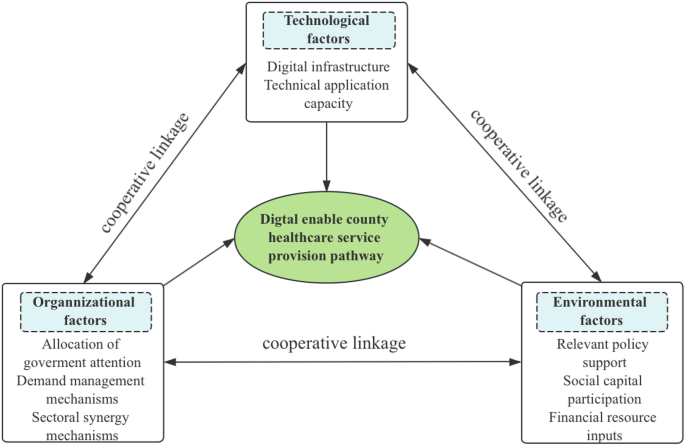
Exploring the pathways of digital technology driven healthcare service delivery in county-level regions
Telehealth Interventions to Improve Chronic Disease | Cardiovascular Disease Data, Tools, and Evaluation Resources